text LUKE WILSHERE
image NIKITA SUBBOTIN
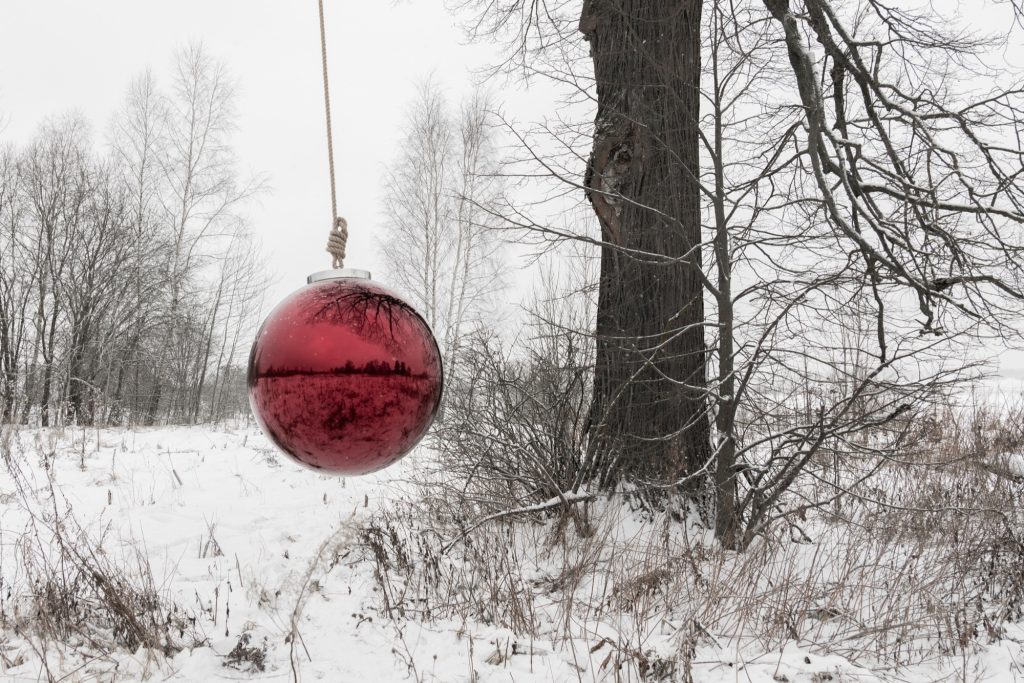
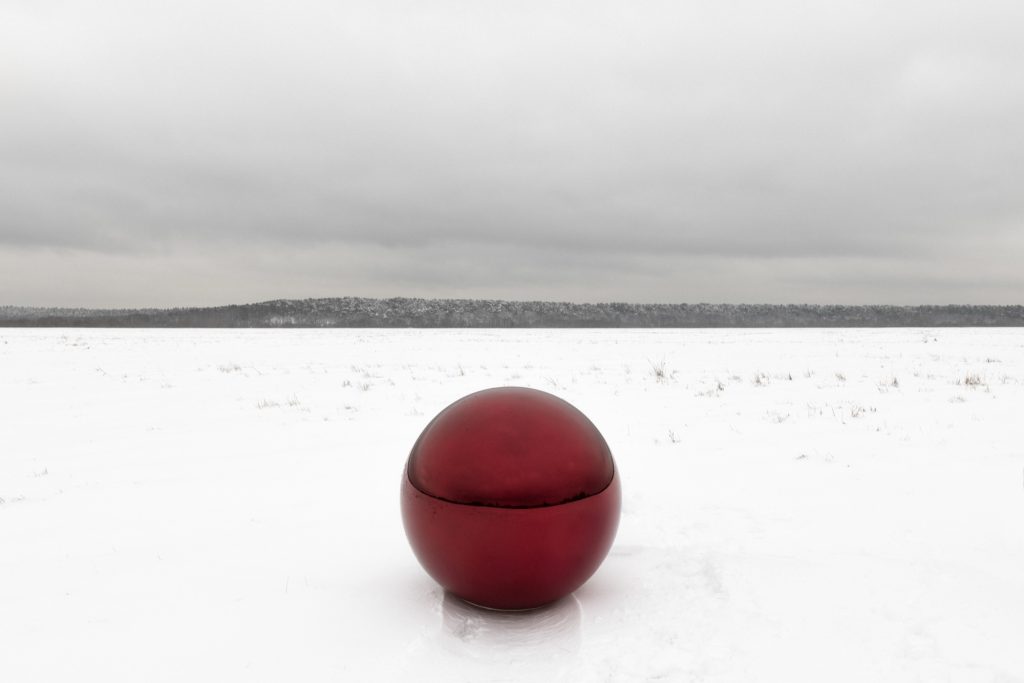
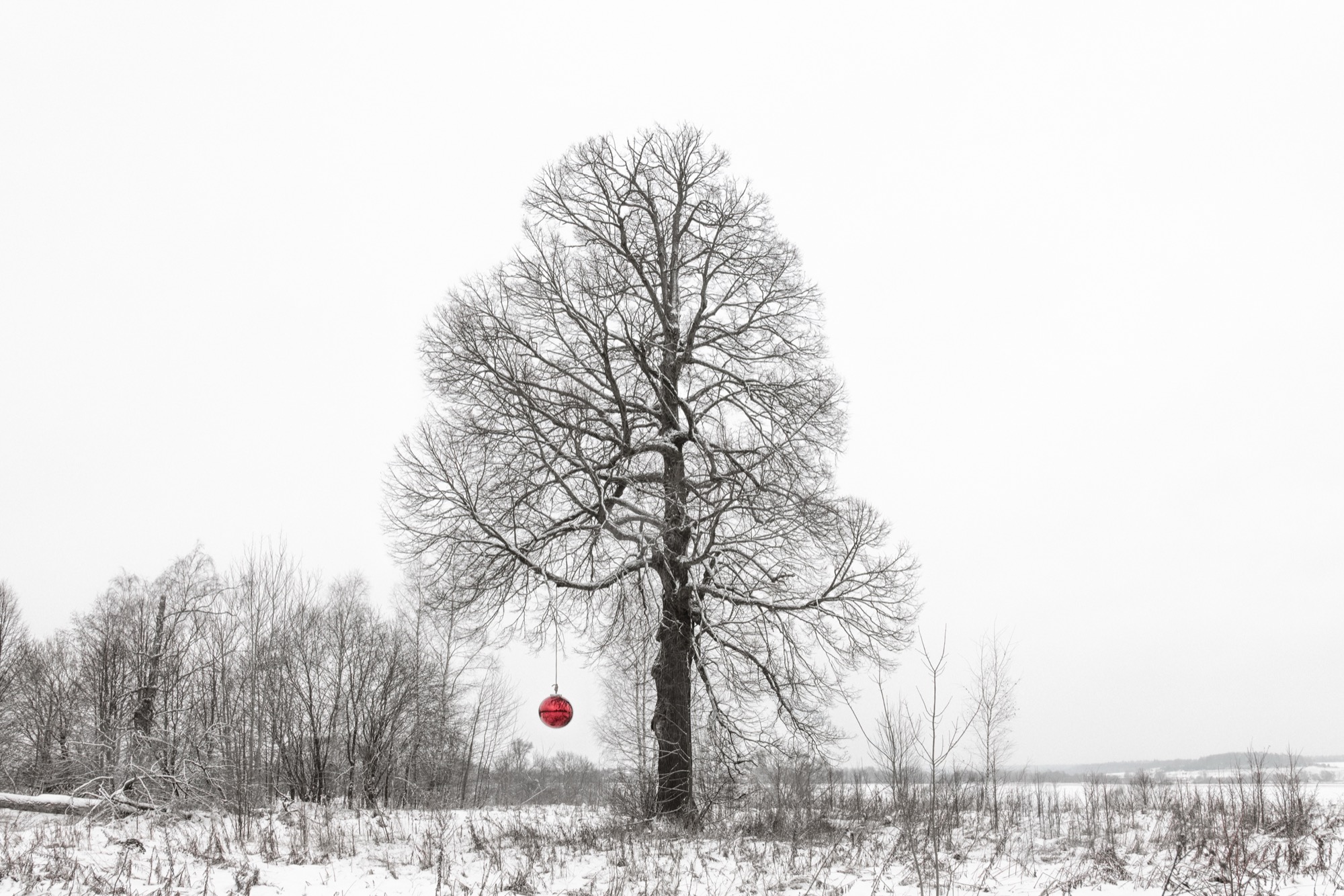
In Gravity, a site specific land art installation realised in Finland in 2026, Gregory Orekhov constructs a condition rather than a scene. The work unfolds as a spatial proposition in which the landscape becomes an active field, making visible a state of instability that defines the present. A single red sphere, displaced from its cultural associations, occupies this field as both object and symptom.
Suspension and Resistance
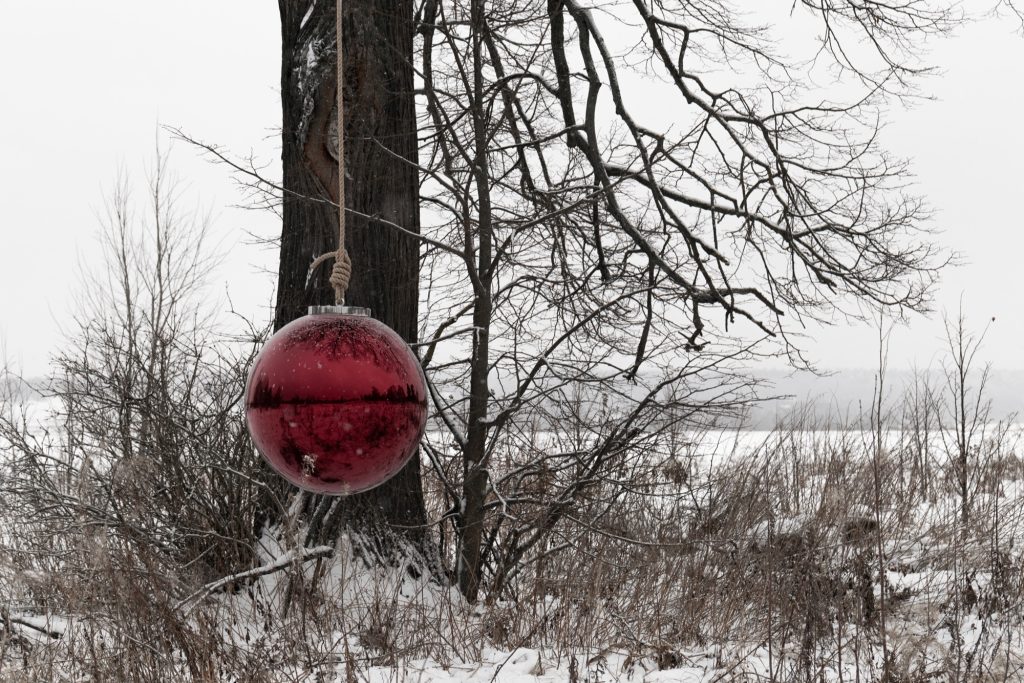
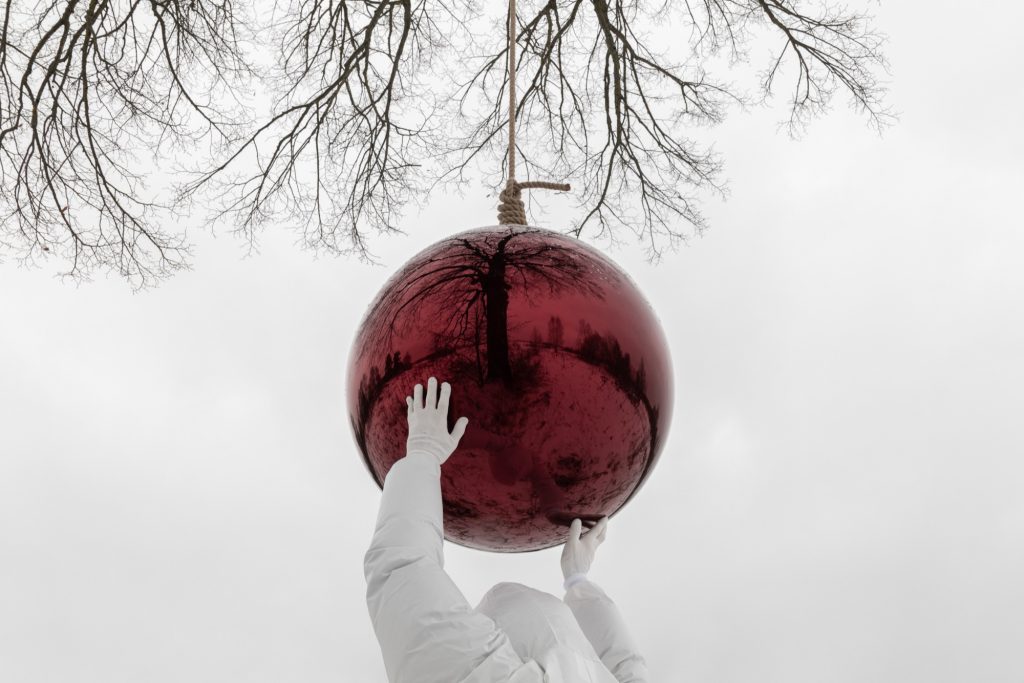
The sphere is suspended from a barren tree by a hemp rope, held between ground and sky in a state that resists resolution. It neither falls nor settles. What emerges is not equilibrium but a prolonged negotiation with gravity itself. The object does not overcome force. It endures it.
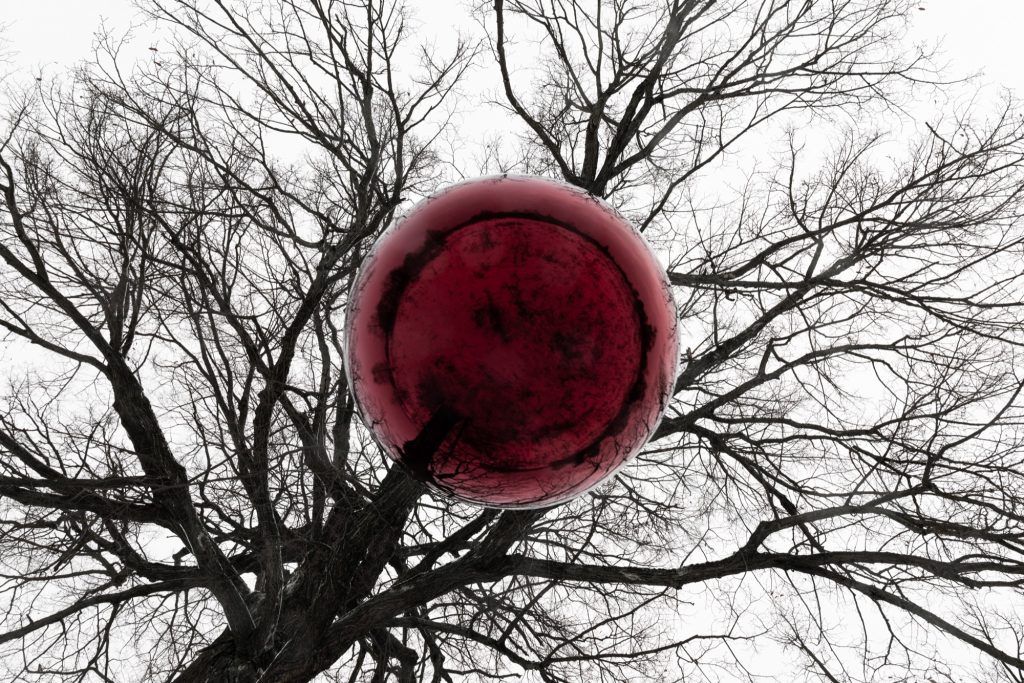
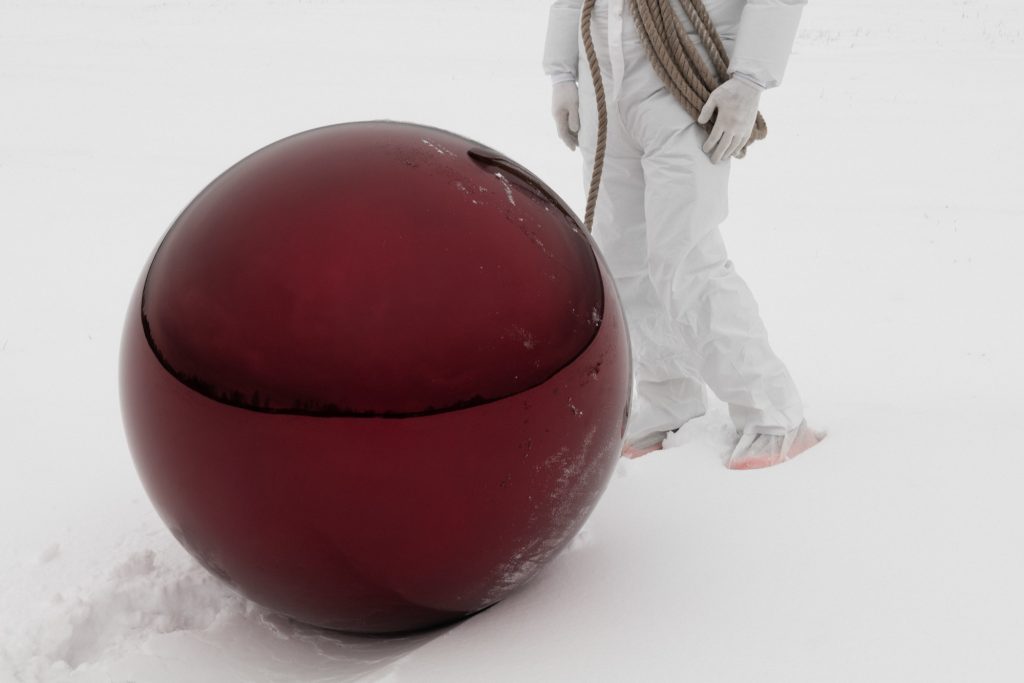
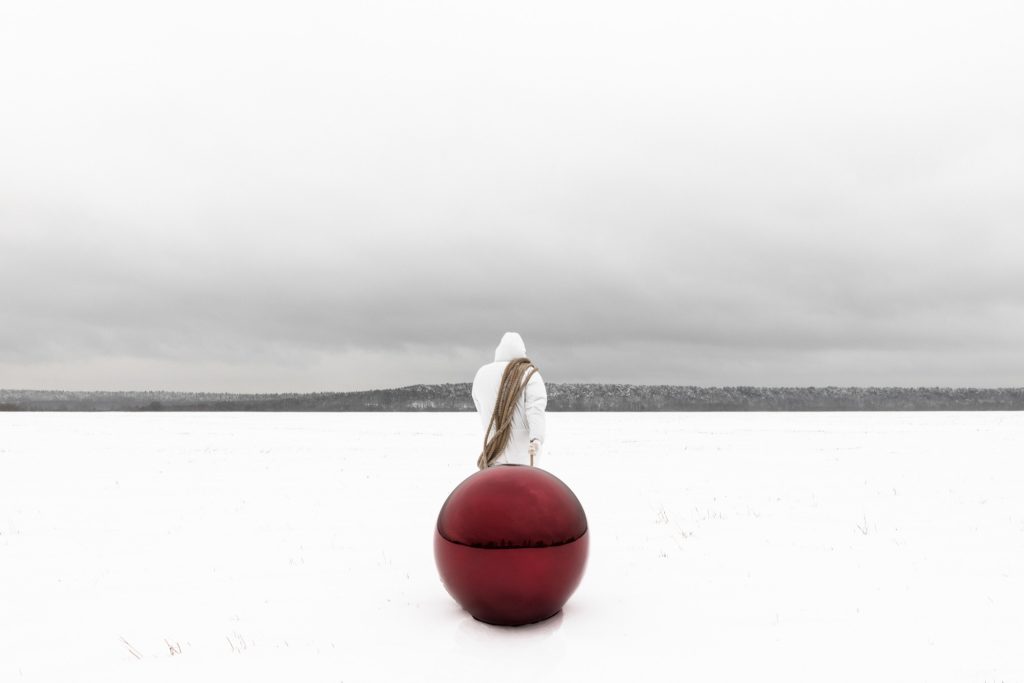
This condition is extended through the accompanying video, where motion shifts from dragging across the ground to oscillation in space. Each phase appears transitional yet never reaches completion. Movement does not produce escape but reinforces a continuous dependency between the object, the human presence, and the gravitational field that binds them.
The Weight of Colour
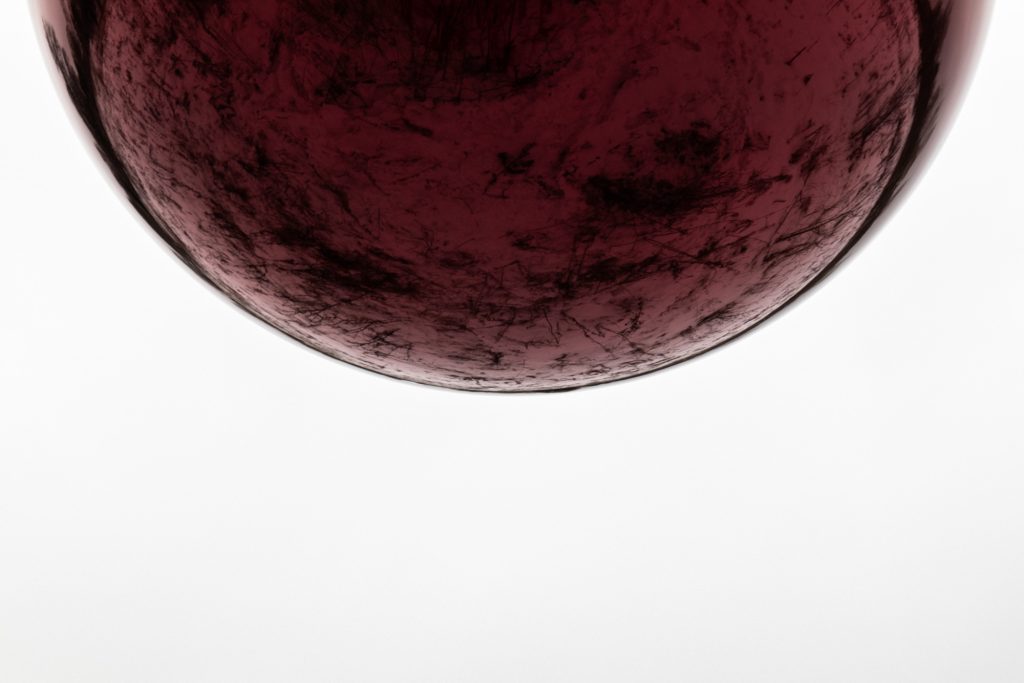
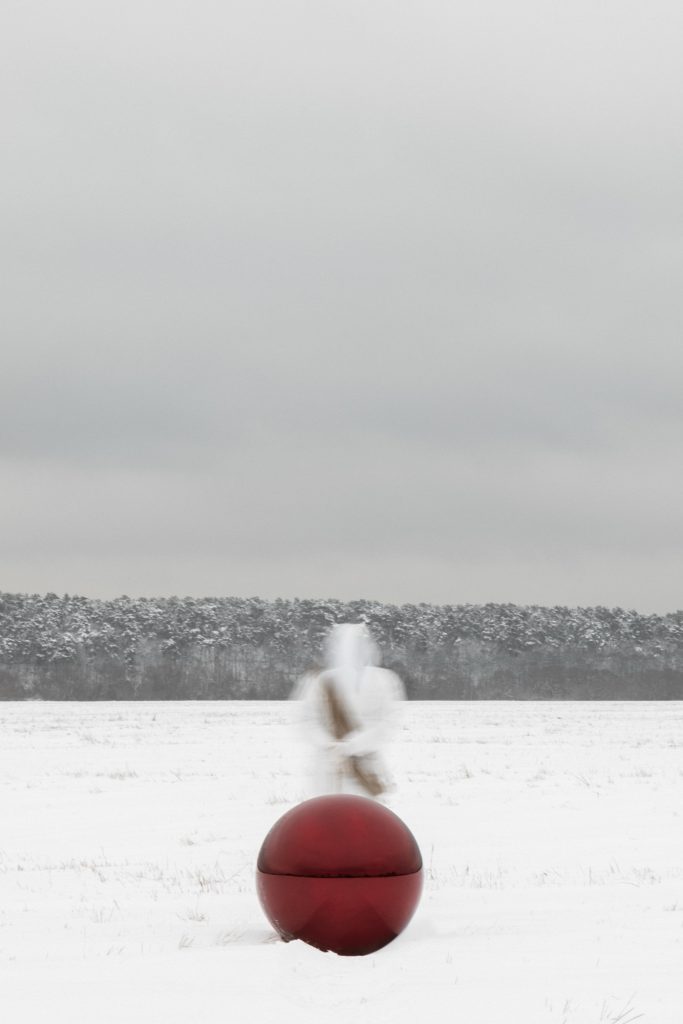
The red surface, mirror polished yet materially dense, withdraws from its decorative or festive connotations. It becomes a concentrated visual mass in which traces of violence, loss, and historical memory converge. Colour no longer signifies celebration. It operates as a condition, registering a world in which the tragic settles into the everyday.

Landscape as Witness
Nature in this work refuses the role of harmony. The tree does not offer protection or redemption. It does not intervene. It simply enables the condition to persist, standing as a silent witness. The landscape does not resolve the tension it contains. It records it.
Gravity does not construct a narrative. It establishes a state in which foundation is absent and outcome remains suspended. The work holds its position within this uncertainty, insisting on duration rather than conclusion.