text FABIO SANCHES
image ROBERTO CONTE
In the Archaeological Park of Herakleia in Policoro, the project Siris unfolds as a subtle reactivation of a site where time, memory, and landscape overlap. Rather than reconstructing what has been lost, the intervention approaches the ruins as an open condition. Art becomes a way to read what is no longer fully visible, allowing fragments of the past to re-enter contemporary perception through experience.
Curated by STUDIO STUDIO STUDIO under the artistic direction of Antonio Oriente, the project introduces three site specific works that move across sculpture, spatial intervention, and sound. Together, they do not attempt to complete the archaeological narrative. Instead, they open it.
Reading the ruin as a living condition
The park, located within the Ionian plain of Basilicata, contains traces of Greek settlements dating back to the seventh century BC. Yet many of these remains exist today only as faint ground level imprints. The project responds to this condition not by restoring visibility in a literal sense, but by constructing new layers of perception.
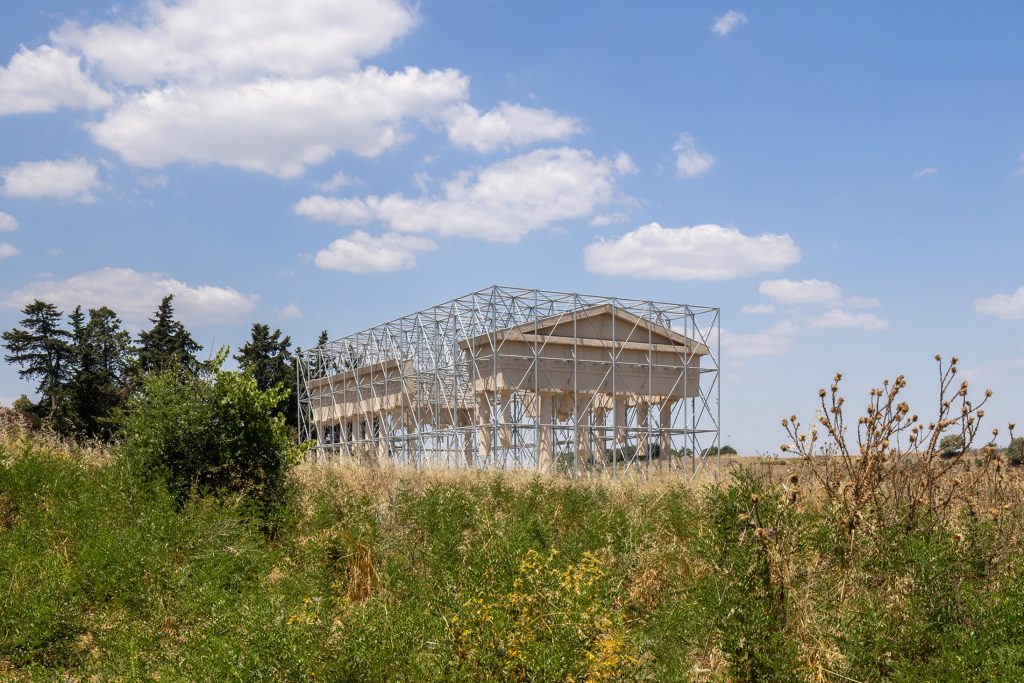
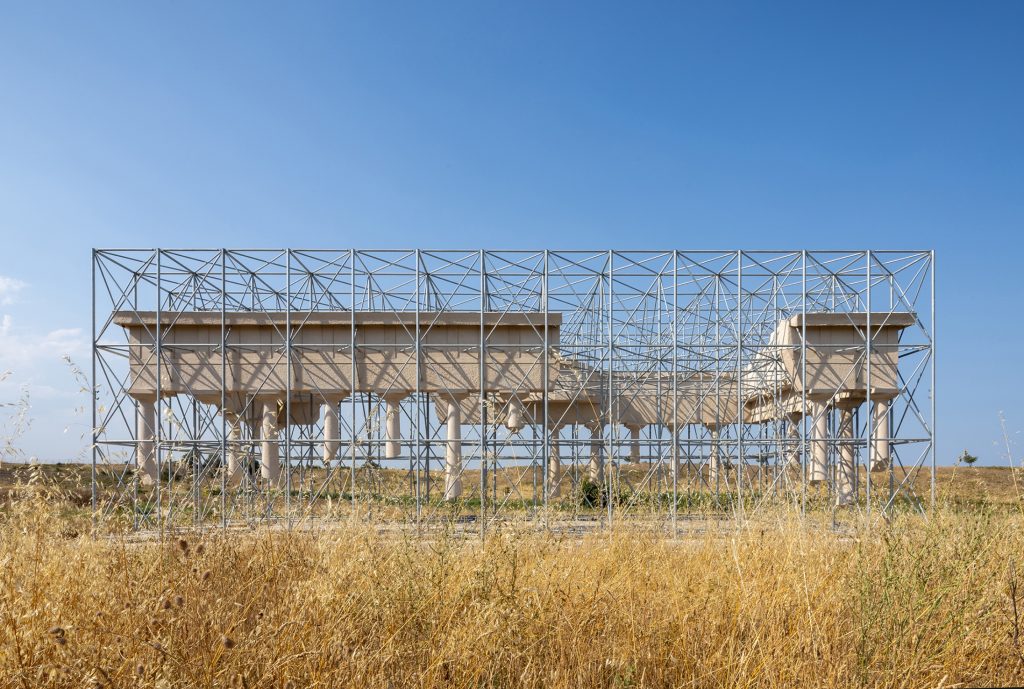
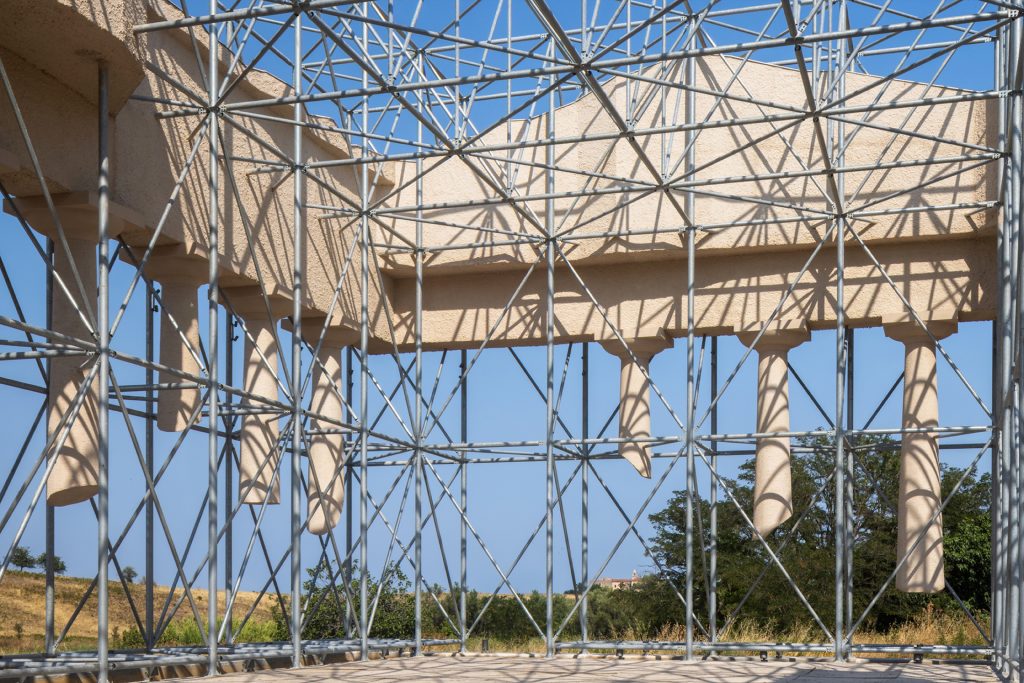
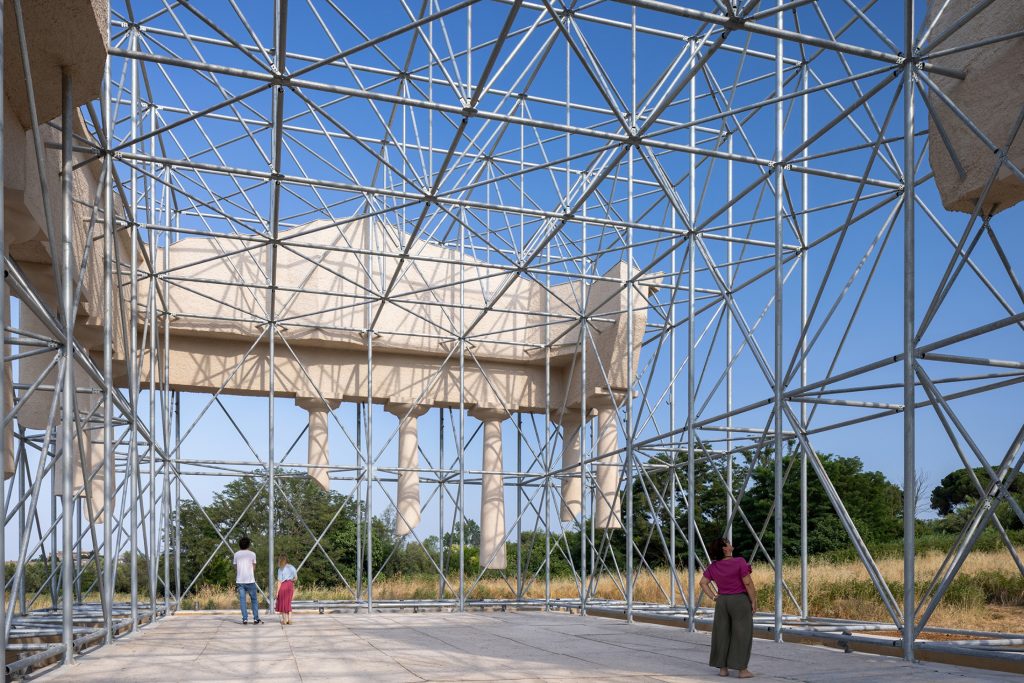
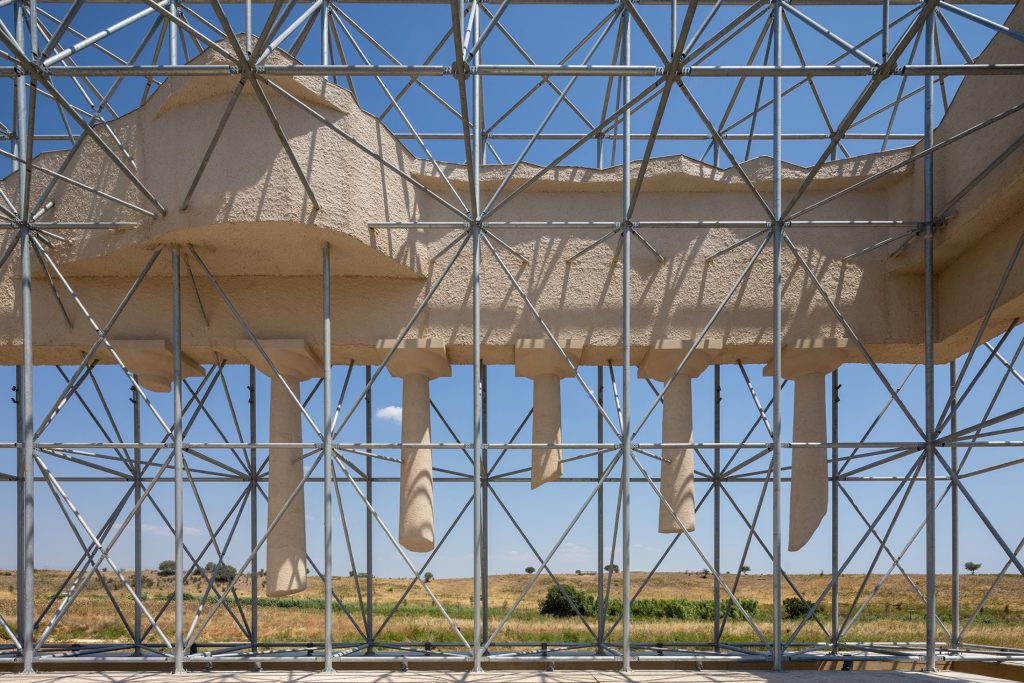
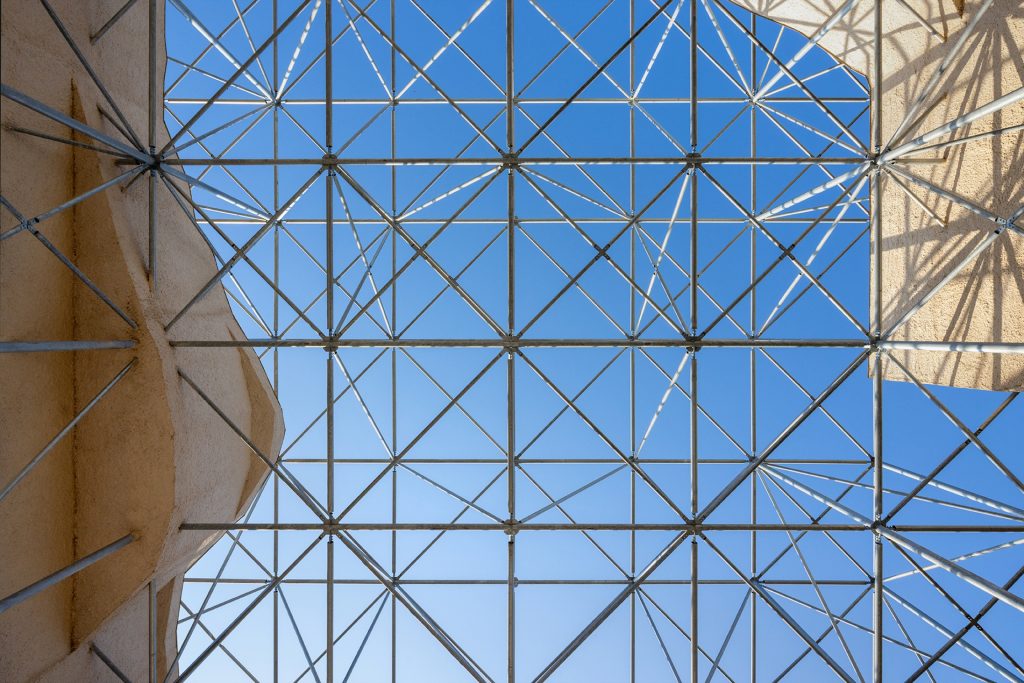
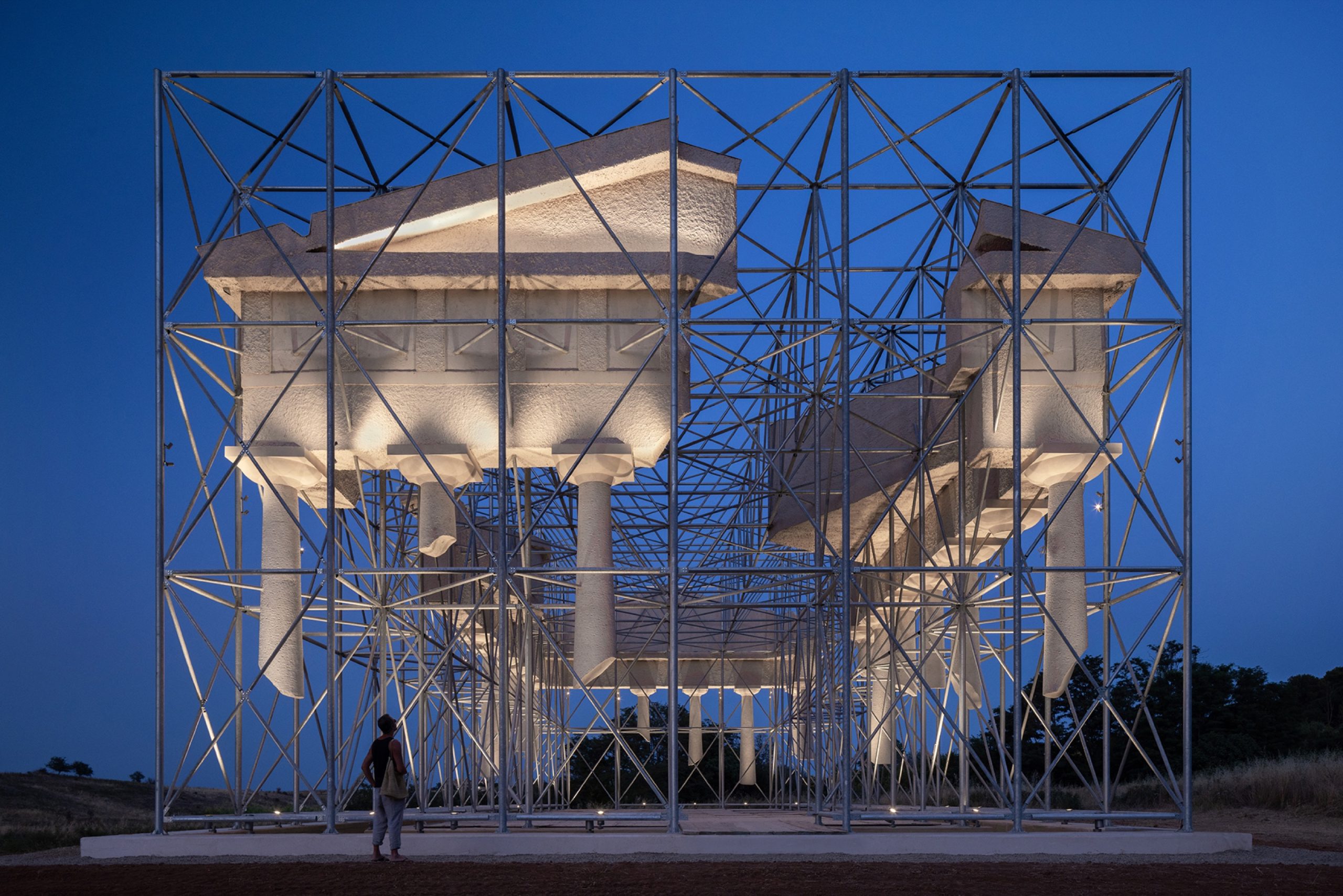
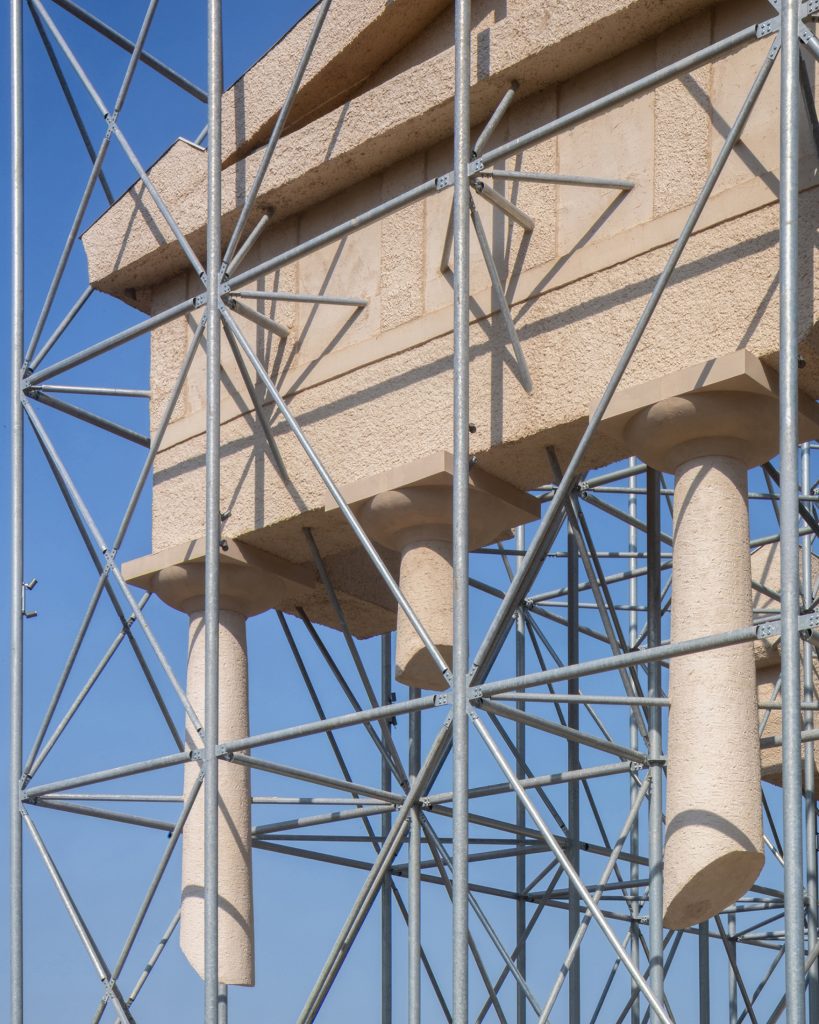
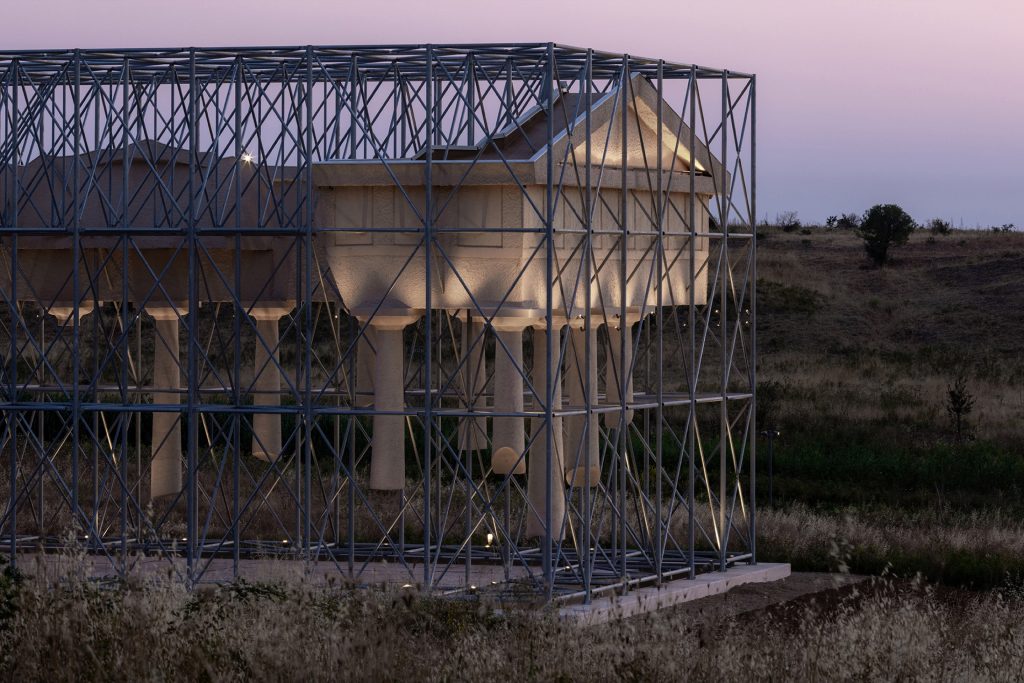
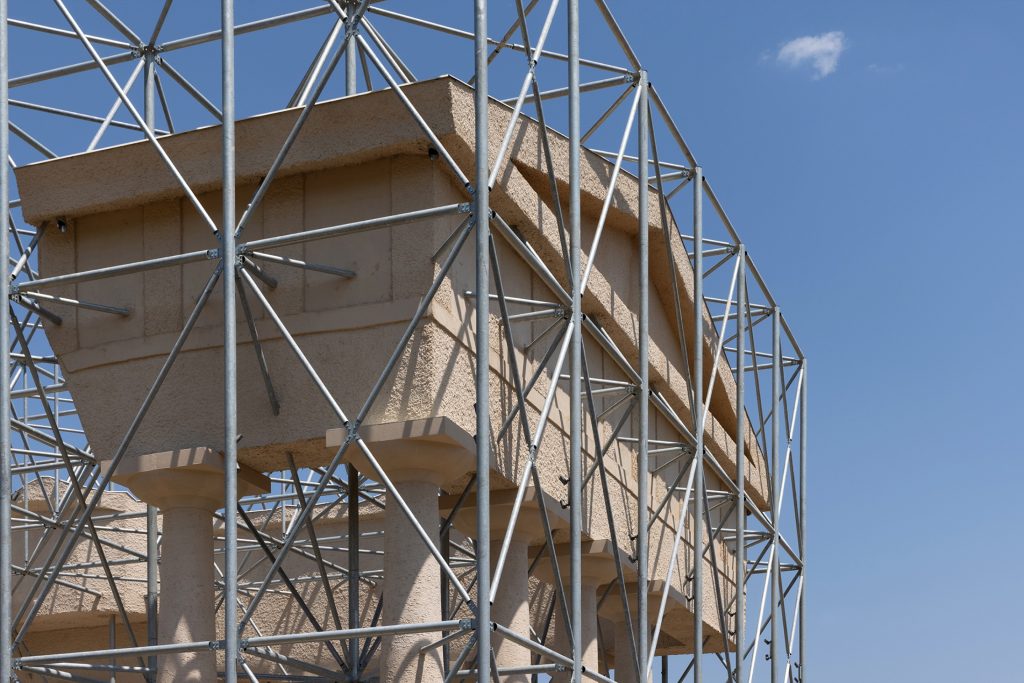
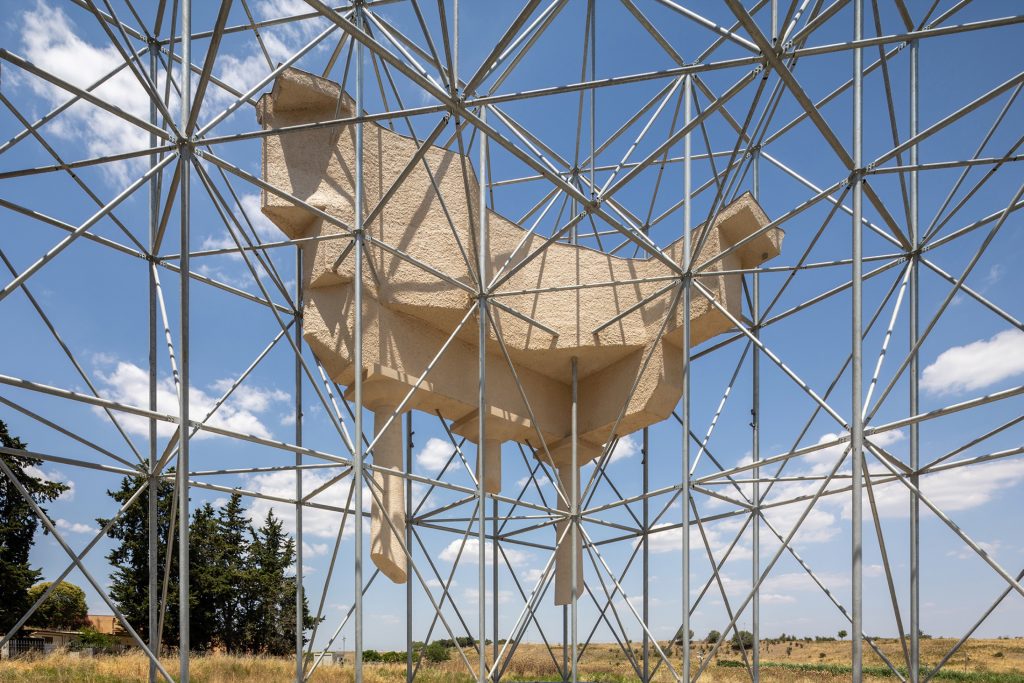
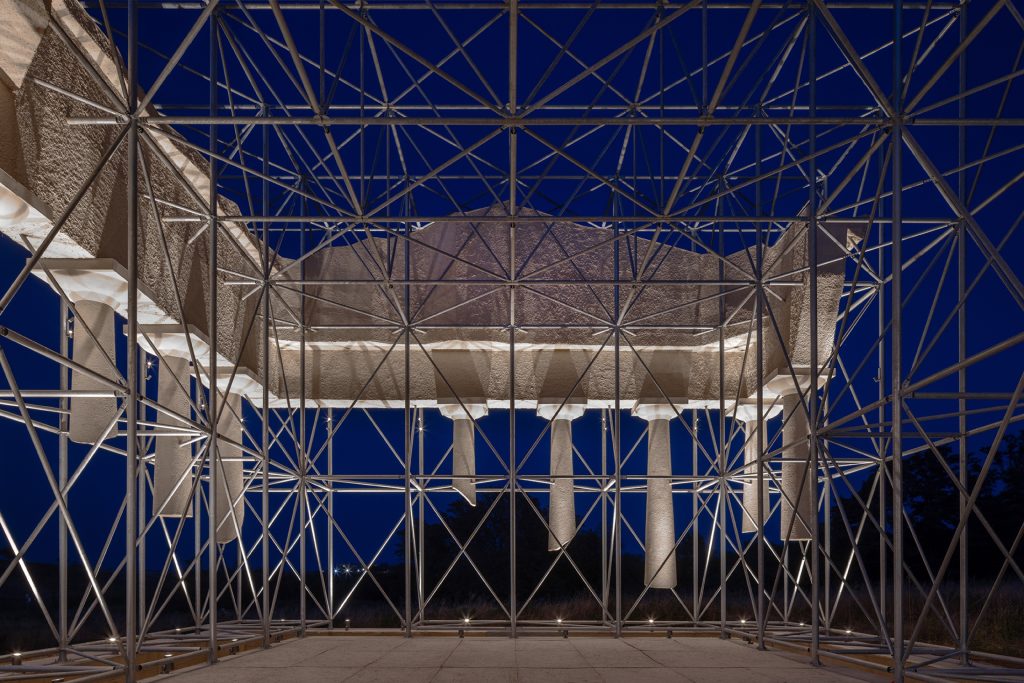
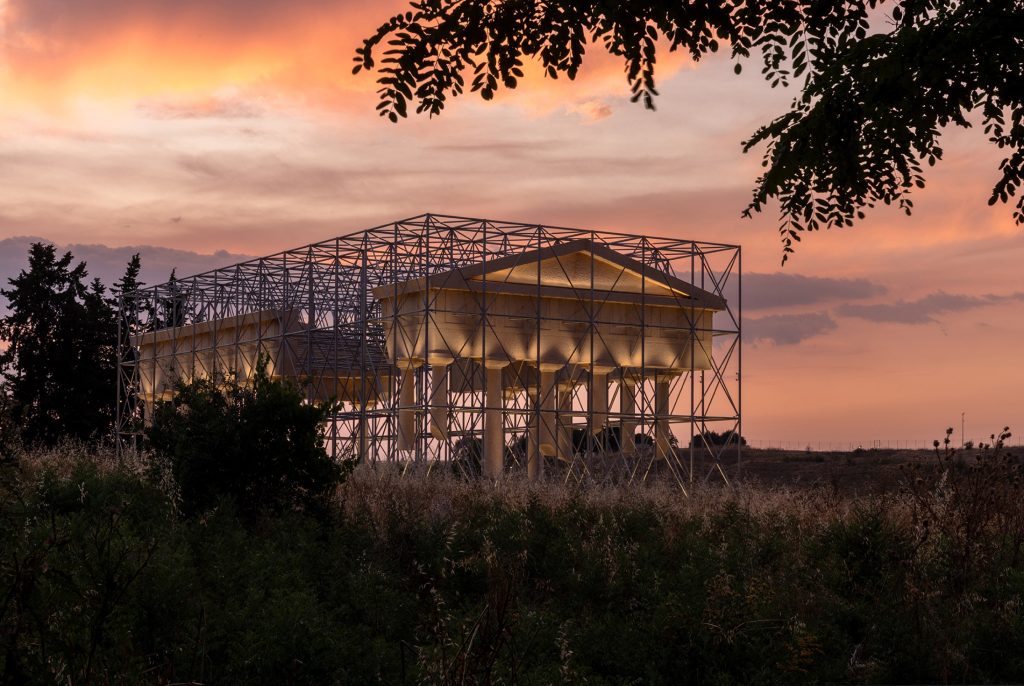
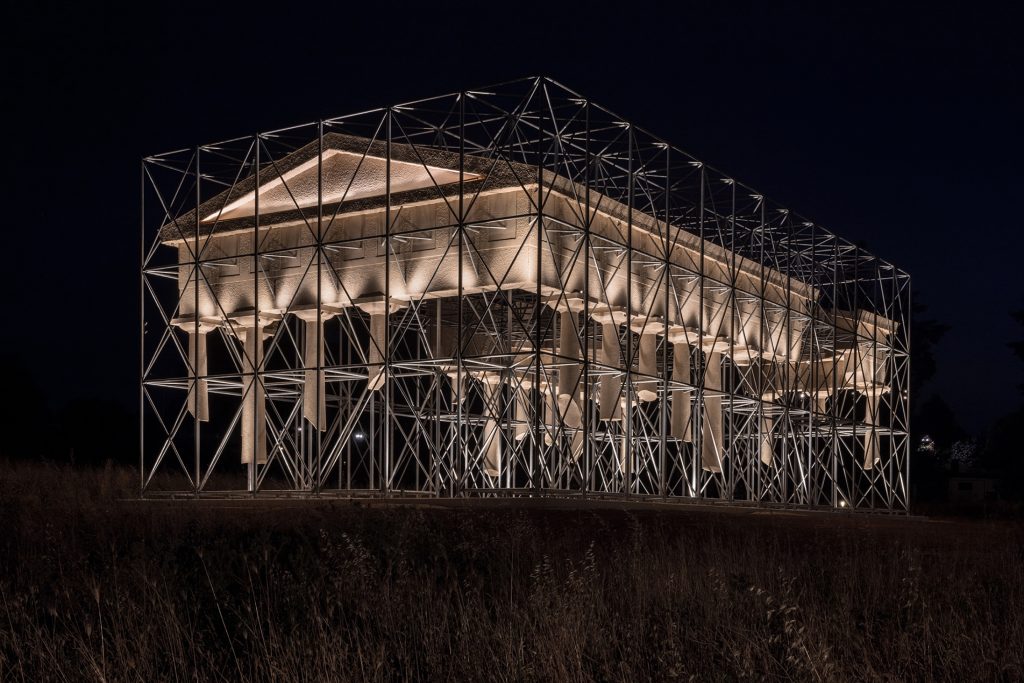
Gijs Van Vaerenbergh’s Inverse Ruin introduces a suspended structure that evokes the absent volume of the Archaic Temple. By reversing the logic of collapse, the work suggests a monument that exists between presence and absence. It does not reconstruct the temple. It frames its disappearance.
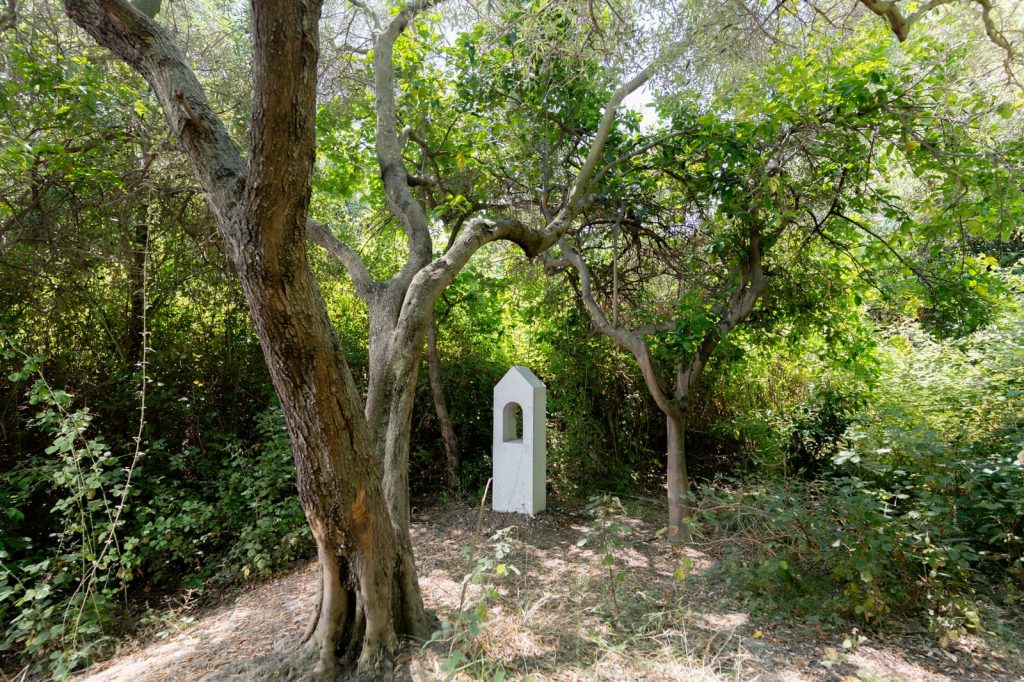
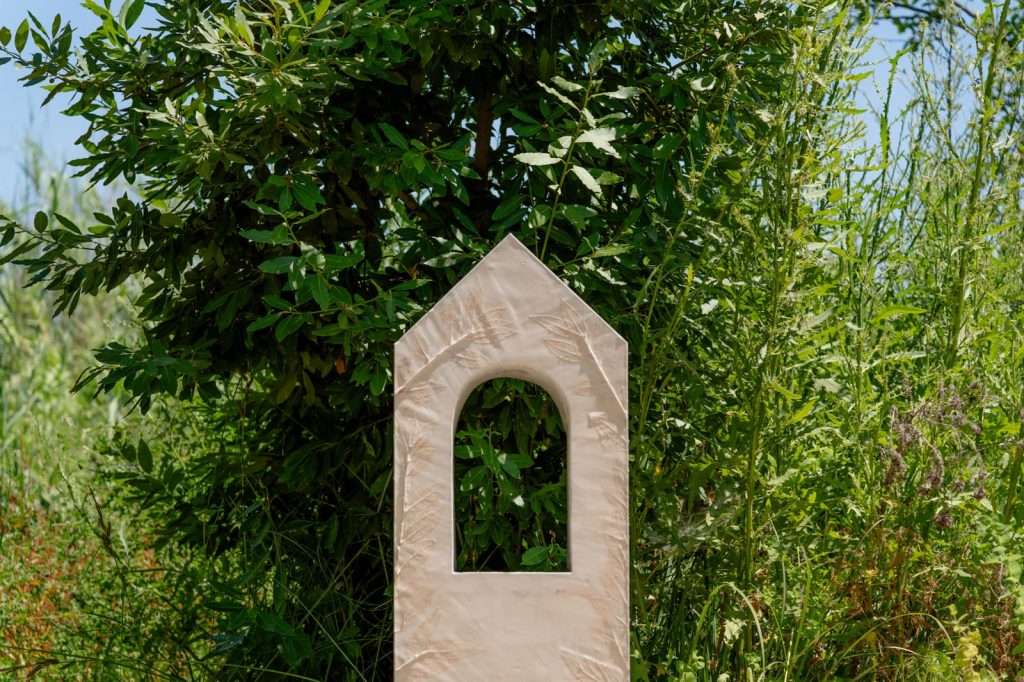
Selva Aparicio’s Chora extends this approach into the landscape. A sequence of sculptural elements guides visitors through the Sacred Wood toward the Sanctuary of Demeter. These forms draw from the language of votive objects, yet they shift their meaning. Nature itself becomes the recipient of devotion. The act of walking becomes a quiet ritual of attention.
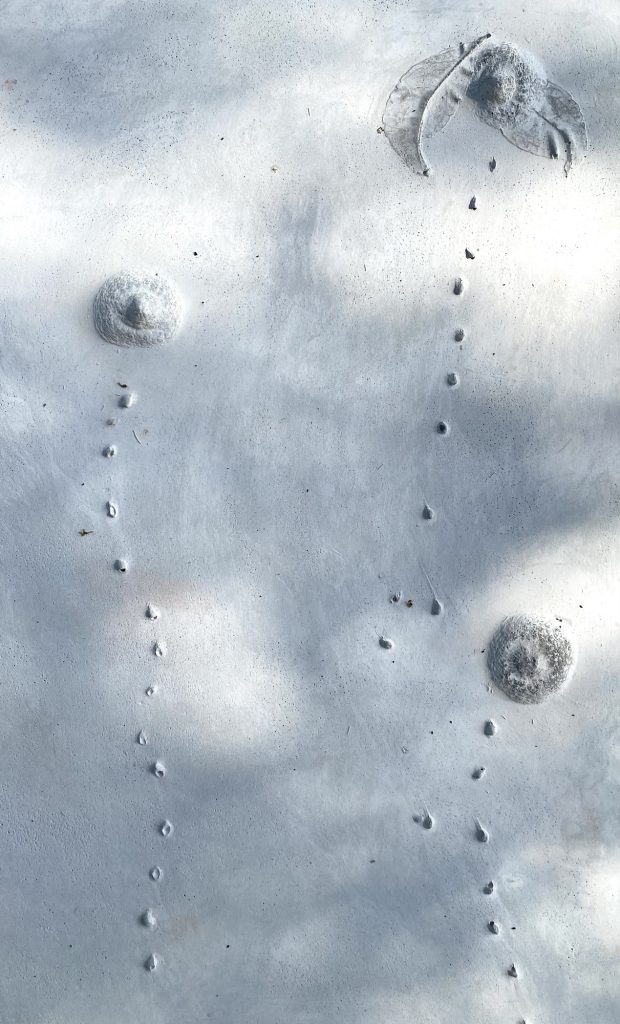
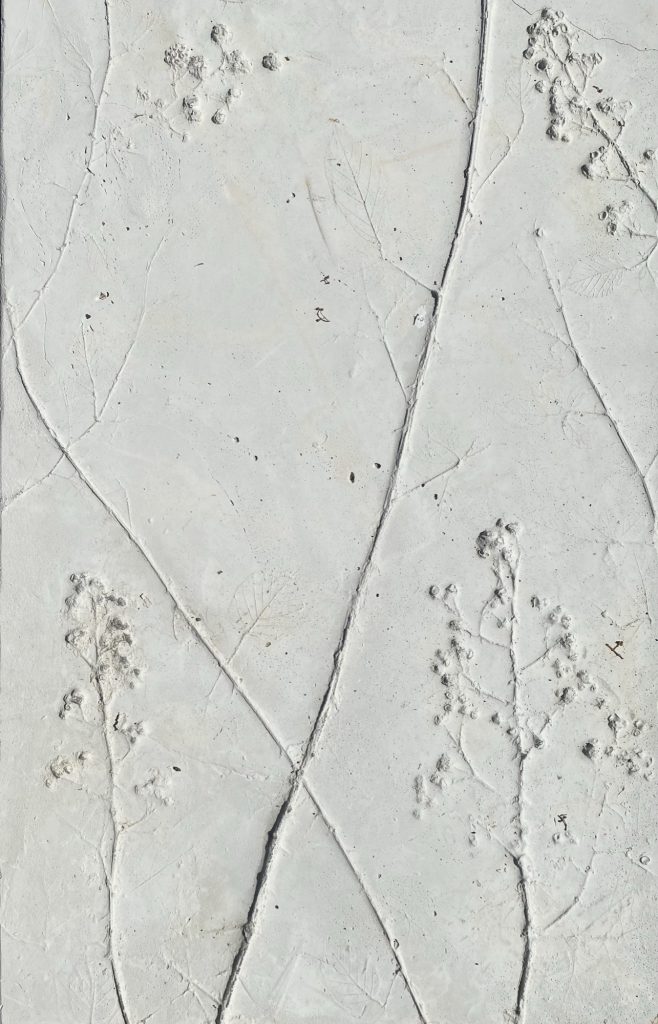
In both cases, the works do not impose themselves onto the site. They emerge from it, aligning with its rhythms and textures.
Sound as a fourth dimension
Max Magaldi’s Arbosonica introduces a different layer of experience. Through a geolocated system, sound is activated as visitors move through the park. The work does not isolate the listener from the environment. Instead, it blends composed sound with wind, water, and distant voices.
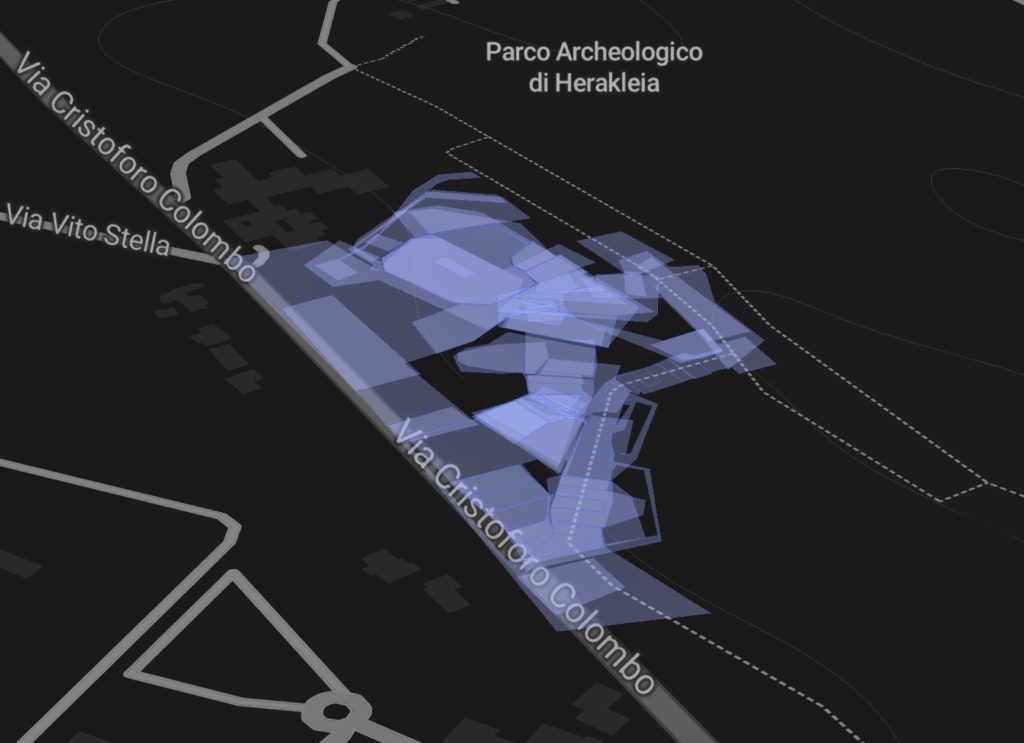
Text by Claudia Fabris and voice compositions by Daniela Pes extend this sonic field into language and memory. Myth, particularly the cycle of Demeter and Persephone, becomes a structure through which time is felt rather than explained. Sound operates here as a medium of continuity, connecting what is no longer visible with what remains present.
Between interpretation and preservation
What defines Siris is its refusal to fix meaning. The project operates through reversible and non invasive interventions. It acknowledges the fragility of the site while proposing new ways of engaging with it.
Rather than separating art, architecture, and landscape, the project allows them to intersect. The archaeological park becomes not only a place of observation, but a field of experience shaped by movement, perception, and time.
In this sense, Siris does not present the past as something complete. It suggests that history is always partial, always in transformation, and that art can act as a medium through which this condition becomes visible again.