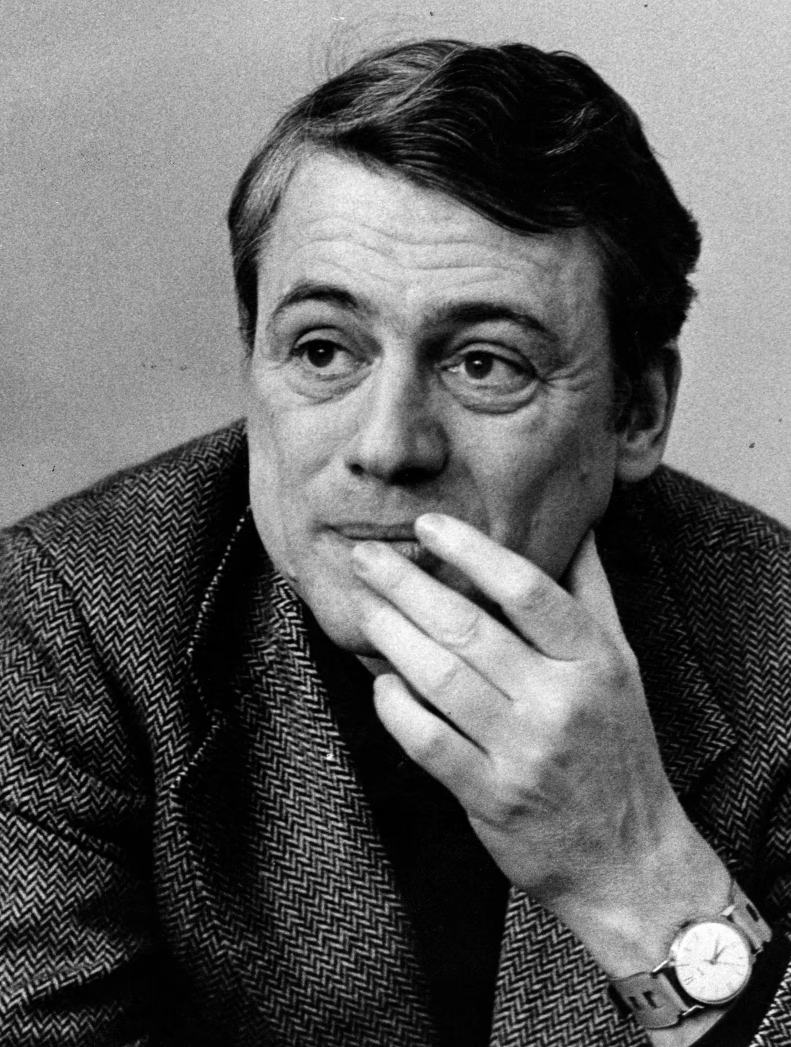
text ELENA ROSSI
cover GETTY IMAGES / THE GUARDIAN
In the spring of 1945, a thirteen year old boy stood in the German city of Halberstadt and watched it collapse under Allied bombing. Decades later, Alexander Kluge would return to this moment not simply as a memory of destruction, but as an early intuition about how meaning is formed. The city had not disappeared. It had broken apart. What remained was a field of fragments. To understand it required an act of reconstruction, one that depended less on authority than on the position of the observer. For Kluge, this was not yet cinema, but it already resembled montage.
From that point onward, his work would proceed from a similar premise. Images were never treated as stable carriers of narrative. They appeared instead as fragments in relation, elements whose meaning would only emerge through their arrangement. Nothing was delivered in full. The viewer was expected to participate in assembling what could only ever remain provisional.
Kluge’s path into filmmaking was indirect. He trained as a lawyer and worked in the late 1950s at the Institute for Social Research in Frankfurt, where he encountered Theodor W. Adorno and the intellectual climate of critical theory. This proximity did not produce imitation. It sharpened his attention to the conditions under which thought can take place. Adorno’s analysis of a world increasingly structured by systems of control finds, in Kluge, not a disciple but a practitioner working through another medium. Where philosophy described closure, Kluge searched for openings.
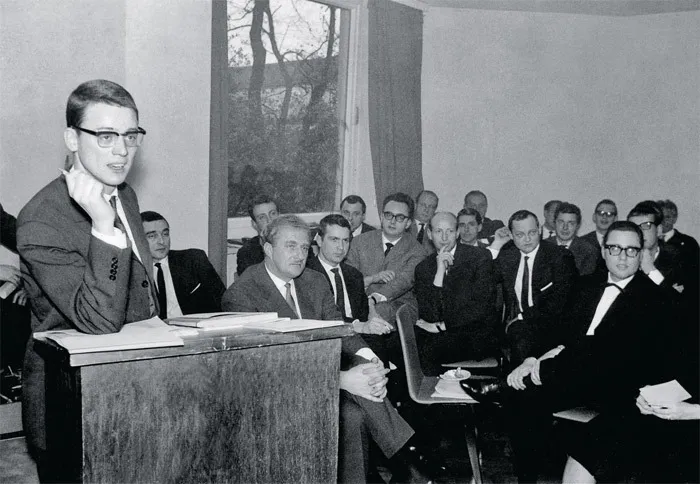
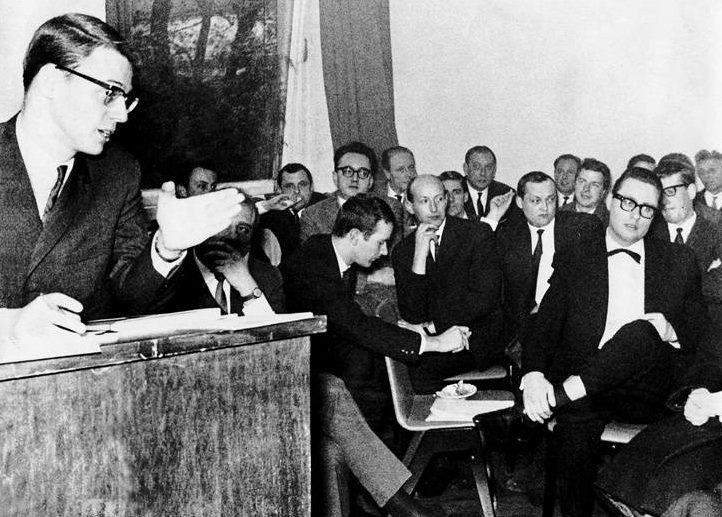
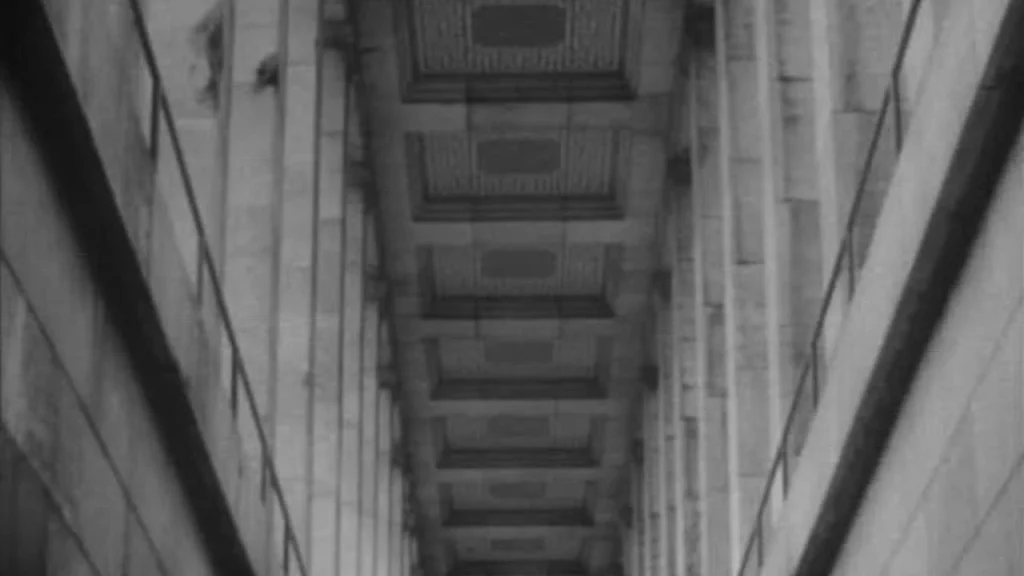
His first film, Brutality in Stone from 1960, made with Peter Schamoni, already signals this shift from theory to practice. The film presents Nazi architecture with a calm, almost detached clarity. There is no overt commentary, no explicit judgement. Instead, the images are interrupted by voices and fragments that refuse to settle into a single meaning. The buildings stand empty, stripped of their former function, while the viewer is left to register their lingering presence. The film does not narrate history. It exposes its residue.
This refusal of narrative continuity would become central to the movement associated with the Oberhausen Manifesto in 1962, in which Kluge played a decisive role. The declaration that the old cinema was dead was not only directed at commercial filmmaking. It questioned the assumption that stories should unfold seamlessly. Kluge’s early features extend this break in form.
Yesterday Girl from 1966 follows its protagonist through a series of encounters that resist narrative closure. Documents, interviews, and fragments of dialogue accumulate without forming a stable storyline. The film moves between registers without warning. It withholds resolution and replaces it with a more demanding form of attention. The viewer is not guided but confronted with material that must be organised internally.
Kluge sometimes described his films using legal language. Evidence is presented. Conclusions remain open.
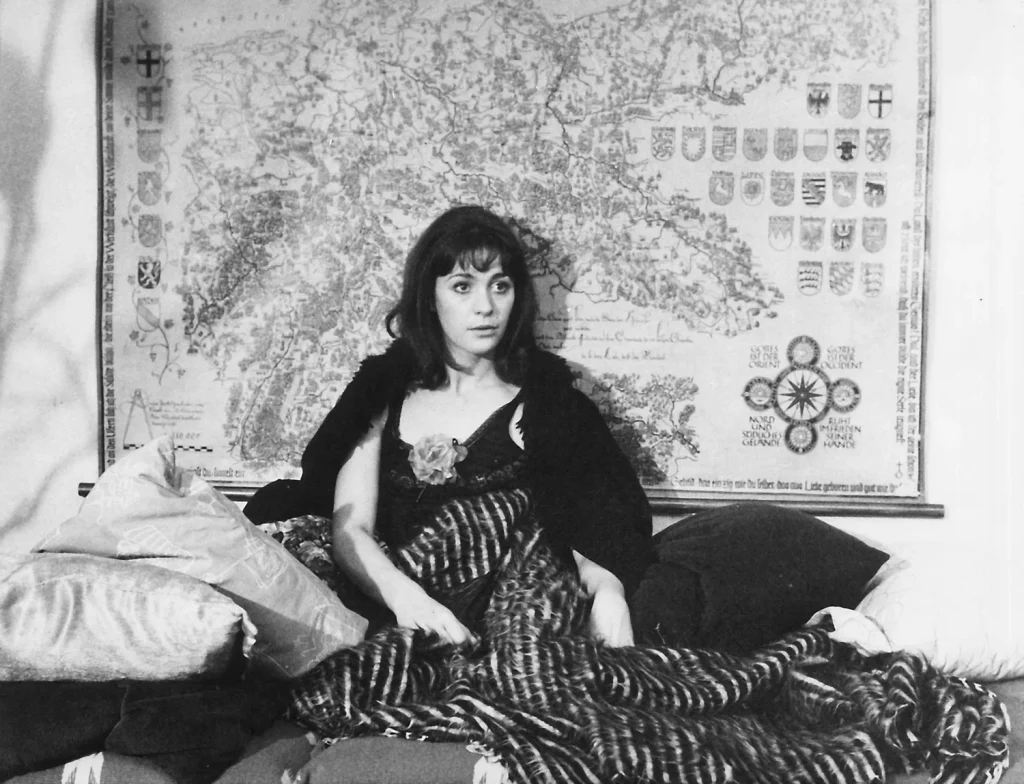
In Artists Under the Big Top Perplexed from 1968, awarded the Golden Lion in Venice, this approach becomes more explicit. The film centres on a failed attempt to create a new form of circus. Rather than resolving failure, Kluge examines it from multiple angles. The collapse of project becomes the structure of the film itself. Utopia appears not as a realised vision but as something that persists through its inability to stabilise.
Failure, in this context, is not a negative outcome. It is a condition that allows thought to continue.
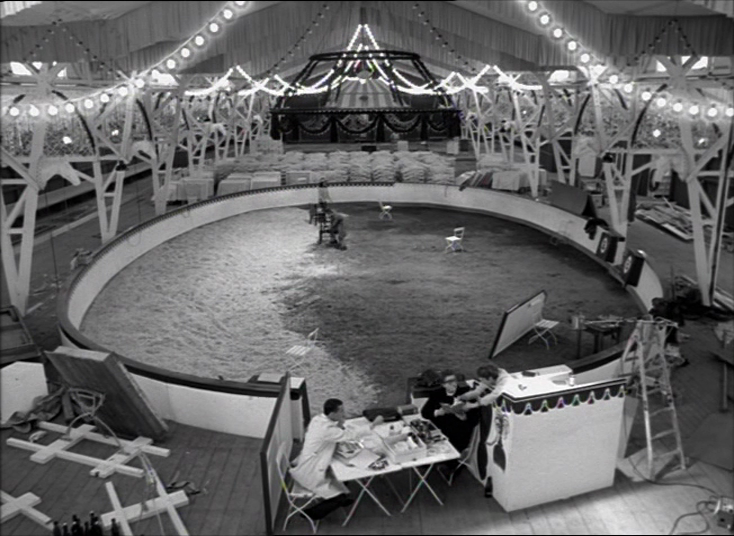
By the 1970s, Kluge’s work moved toward collective forms. Germany in Autumn from 1978, created in response to a period of political tension, assembles contributions from several filmmakers into a deliberately unsettled composition. The film shifts between public events, private spaces, and media representations without establishing a dominant perspective. It does not offer a unified interpretation. Instead, it creates a field in which conflicting experiences coexist.
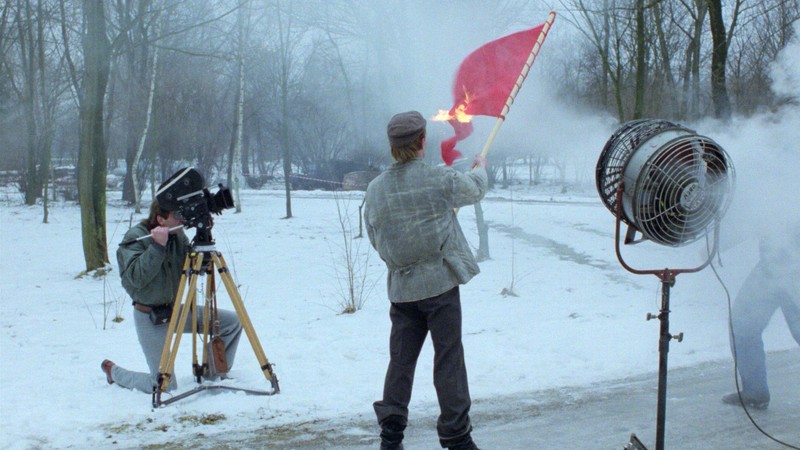
This approach parallels his collaboration with Oskar Negt, particularly in The Public Sphere and Experience. In that work, the public sphere is not understood as a space of agreement but as a domain where experiences excluded from official discourse can nonetheless appear. Kluge’s films operate in a similar way. They do not organise reality into clarity. They allow contradictions to remain visible.
The idea often associated with Kluge’s work, sometimes described as a cinema of citation, is less about collage than about relation. His films do not rely on the shock of juxtaposition. They construct connections that remain open. Meaning does not reside in individual images but emerges in the space between them.
This method resonates with the thinking of Walter Benjamin, where meaning is produced through constellations rather than linear progression. Kluge’s films do not argue in a conventional sense. They arrange. The viewer’s role is not to follow a story but to trace relationships.
In The Power of Emotions from 1983, this approach unfolds through an engagement with opera. Fragments of operatic narrative intersect with contemporary images and commentary. The emotional structures of opera are not reproduced but displaced into new contexts. What remains is a question about how forms of feeling persist across different historical conditions.
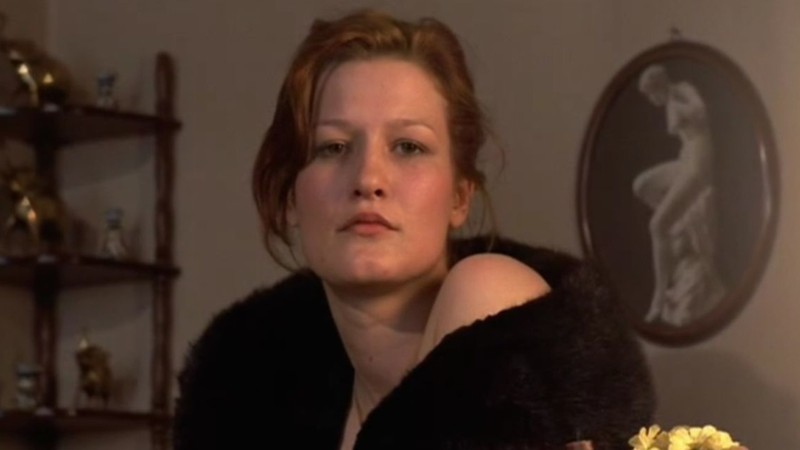
This question expands in News from Ideological Antiquity from 2008, an extended reflection on Marx’s Capital. The work brings together interviews, staged scenes, archival material, and performance without attempting synthesis. It demands time and attention. It resists simplification. Rather than presenting knowledge, it constructs a situation in which knowledge must be actively formed.
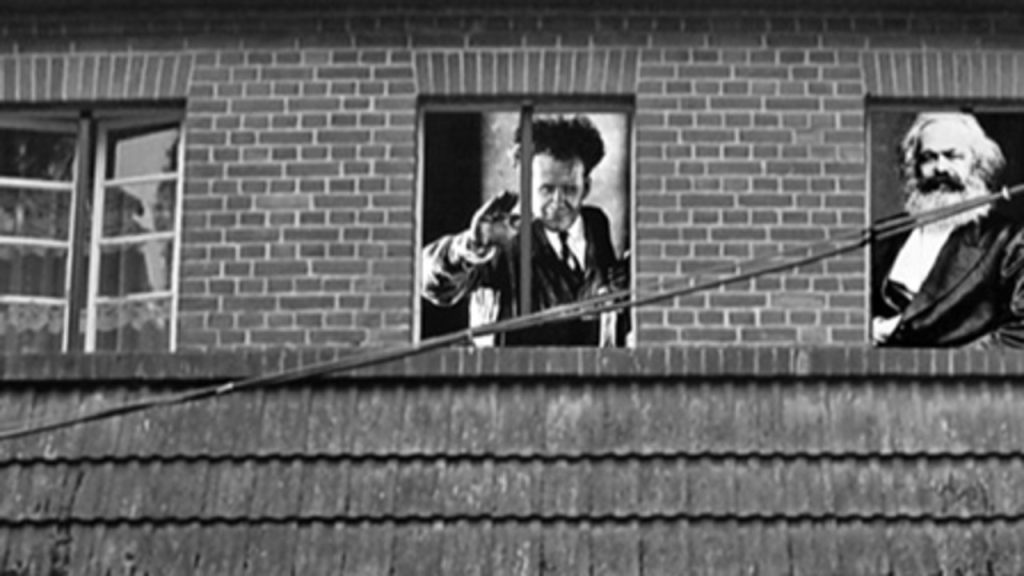
Duration plays a central role here. Kluge’s work resists the compression of experience. Where contemporary media often prioritises speed and clarity, his films introduce delay and interruption. These are not obstacles but necessary conditions for thinking.
His literary work follows a comparable logic. In Chronicle of Feelings and other collections, short texts combine historical detail, anecdote, and invention in condensed forms. Each fragment remains incomplete. Meaning emerges through accumulation rather than resolution. These texts are not secondary to the films. They extend the same method through another medium.
When Kluge established his television production platform in 1987, he brought this approach into a space typically defined by continuity. Programmes such as 10 vor 11 and The Hour of the Filmmakers used modest formats but resisted passive viewing. Interviews, archival material, and commentary were arranged without closure. The viewer was treated as a participant rather than a recipient.
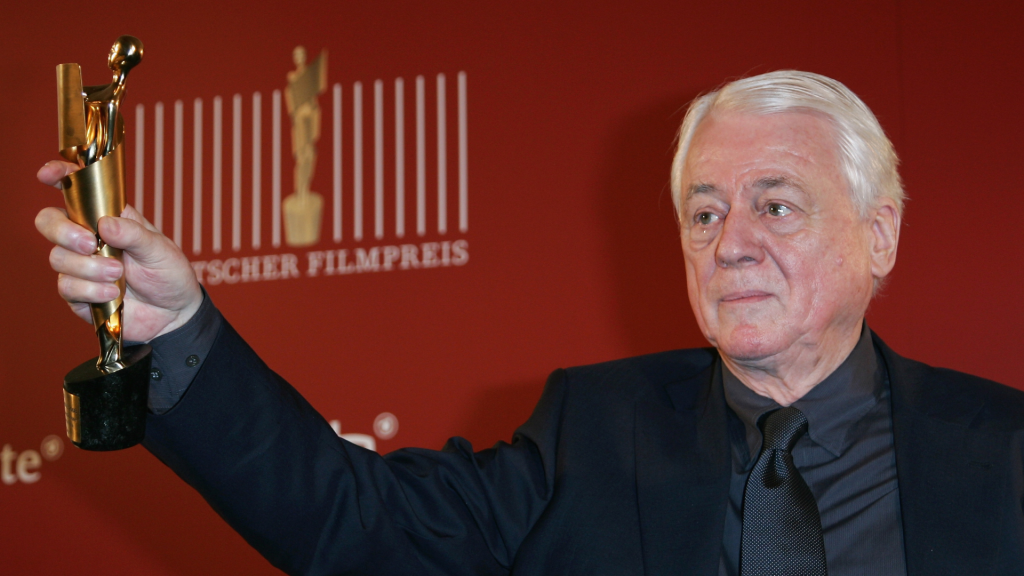
Within the structures of broadcast media, Kluge opened a space that functioned differently from mainstream television. It was limited, often marginal, but it allowed for forms of engagement that would otherwise remain excluded.
His late work continues this trajectory under new technological conditions. Primitive Diversity from 2025 engages with generative image systems without adopting their logic of coherence. The film presents short sequences that recall early cinema, only to destabilise them. Images shift and dissolve, refusing to settle into stable forms.
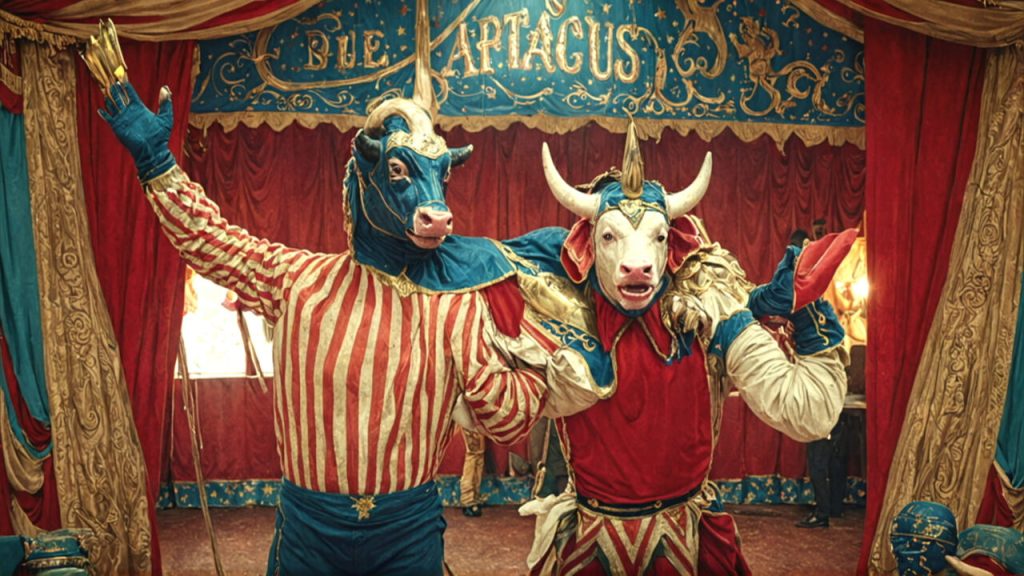
In one sequence, a digitally generated reconstruction of wartime Halberstadt gradually transforms into something resembling a child’s drawing. The transition is not explained. It remains suspended. The gap between the two images becomes the point at which reflection begins.
Kluge does not approach technology as either promise or threat. He treats it as material, something that can be interrupted and reshaped.
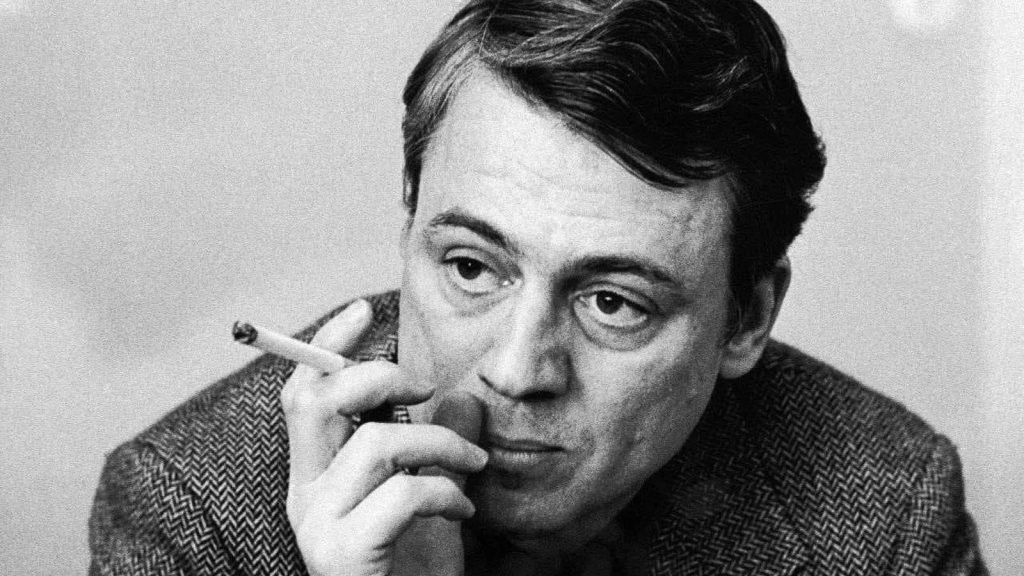
What distinguishes him from many of his contemporaries is not simply his rejection of narrative, but his refusal to stabilise that rejection into a recognisable style. His work resists consolidation. It avoids becoming a fixed signature. Instead, it remains in motion, open to reconfiguration.
This extends to the question of authorship. His films incorporate multiple voices without subordinating them to a single perspective. The author is present, but not dominant. The work becomes a site of negotiation.
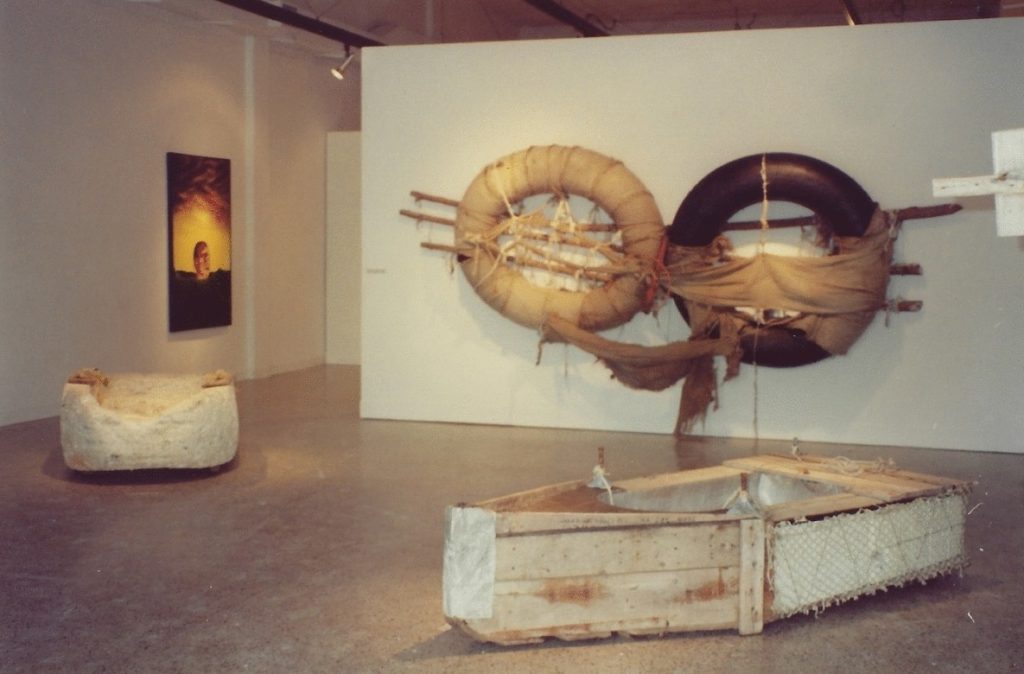
Shortly before his death, Kluge returned to an image he had used before. Cultural institutions, he suggested, are like halls built from wood. In stable times, they provide shelter. In times of crisis, the wood must be dismantled and used to build rafts. The image is direct. It suggests that cultural forms are not permanent structures but resources that can be reassembled.
Kluge’s work can be understood as a sustained attempt to construct such provisional forms. They are fragile but functional. They remain open.
In a landscape shaped by the continuous flow of images, where coherence is often simulated and contradictions are smoothed over, his method takes on renewed urgency. His films do not resolve complexity. They preserve it.
This preservation is not passive. It requires attention and effort. It asks the viewer to remain within uncertainty.
Kluge’s legacy is not something that can be easily contained. It is not a fixed body of work but a way of working that continues to challenge how images function. It insists that meaning is constructed and that this construction is never complete.
In the space between fragments, something persists. Kluge called it experience. It may also be understood as the condition of possibility itself.