text PHILLIPE GONZALEZ
design CARBAJO HERMANOS
image JOSÉ HEVIA
location SANTANDER, SPAIN
In Santander, Colección ES Headquarters proposes a quiet but radical shift in how a private collection might be inhabited. Rather than consolidating artworks within the controlled neutrality of the gallery, the project dissolves the boundary between exhibition and occupation, allowing art to permeate the rhythms of work, conversation, and daily routine.
This is not a space designed to display art as a separate cultural layer. It is constructed around the premise that art can operate as a spatial condition, one that informs movement, perception, and the subtle choreography of everyday life. The collection remains constant, yet its meaning is continuously reconfigured through proximity, use, and time.
THE COLLAPSE OF PROGRAM
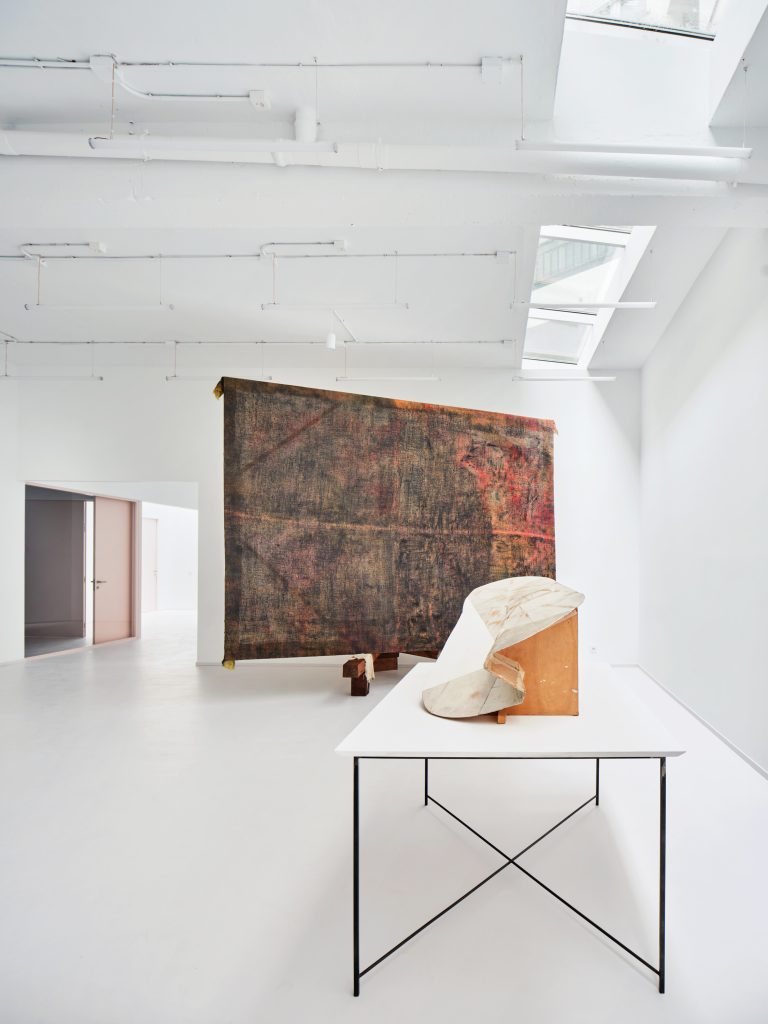
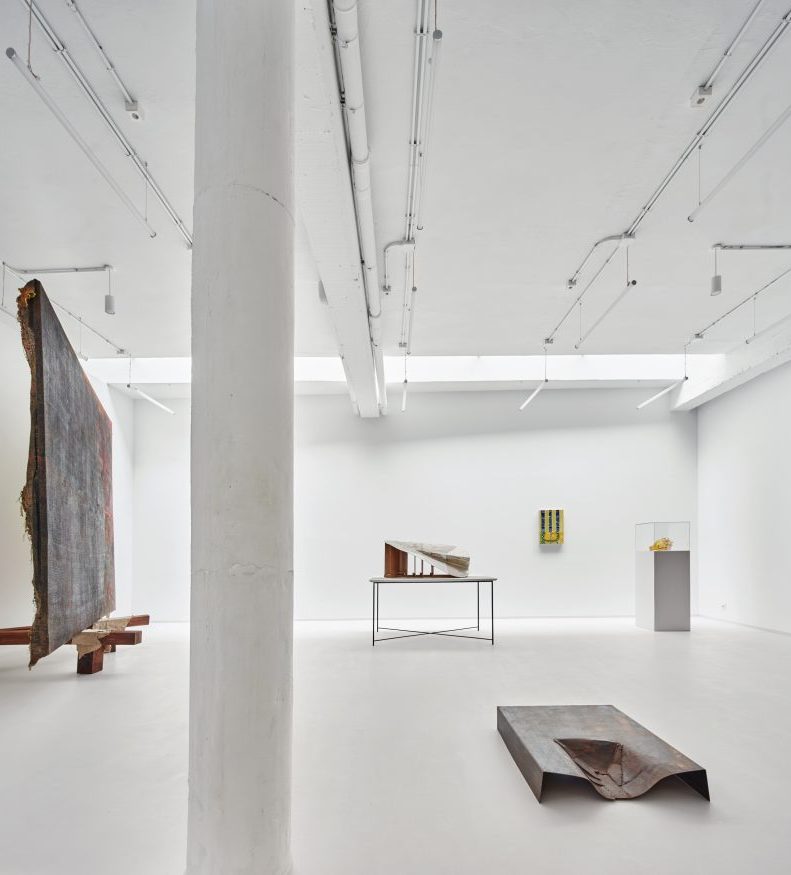
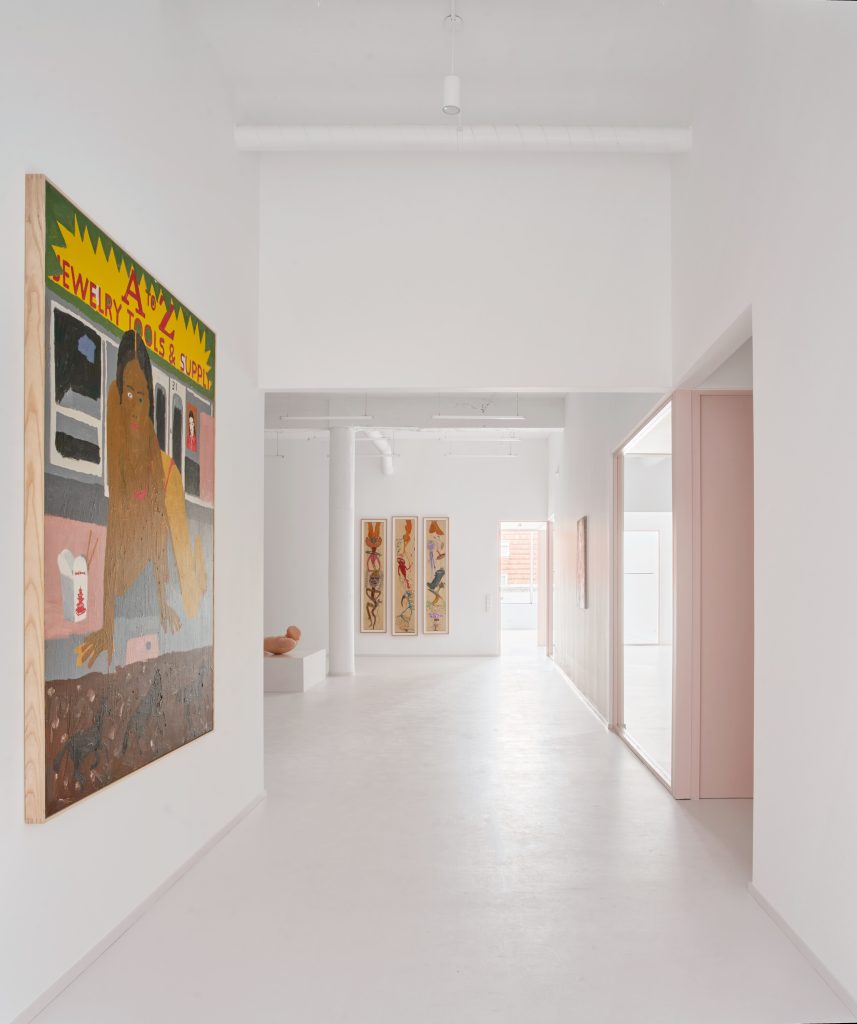
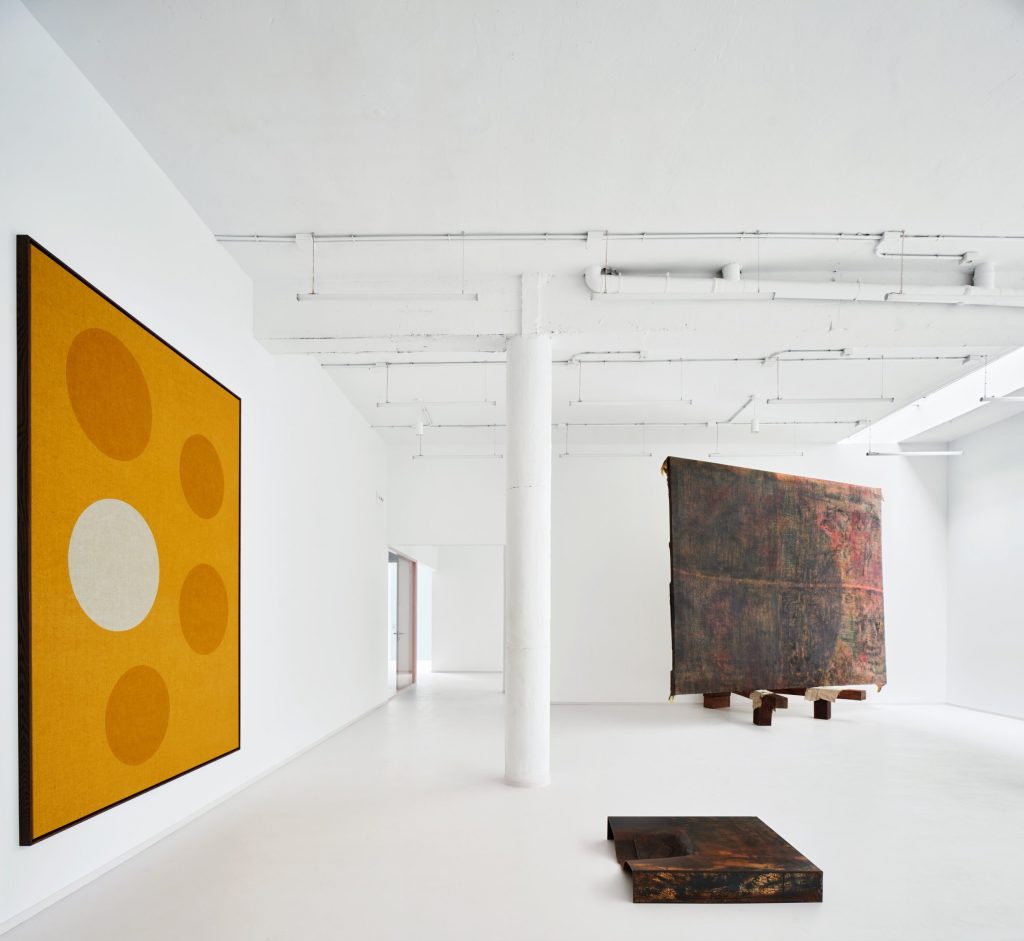
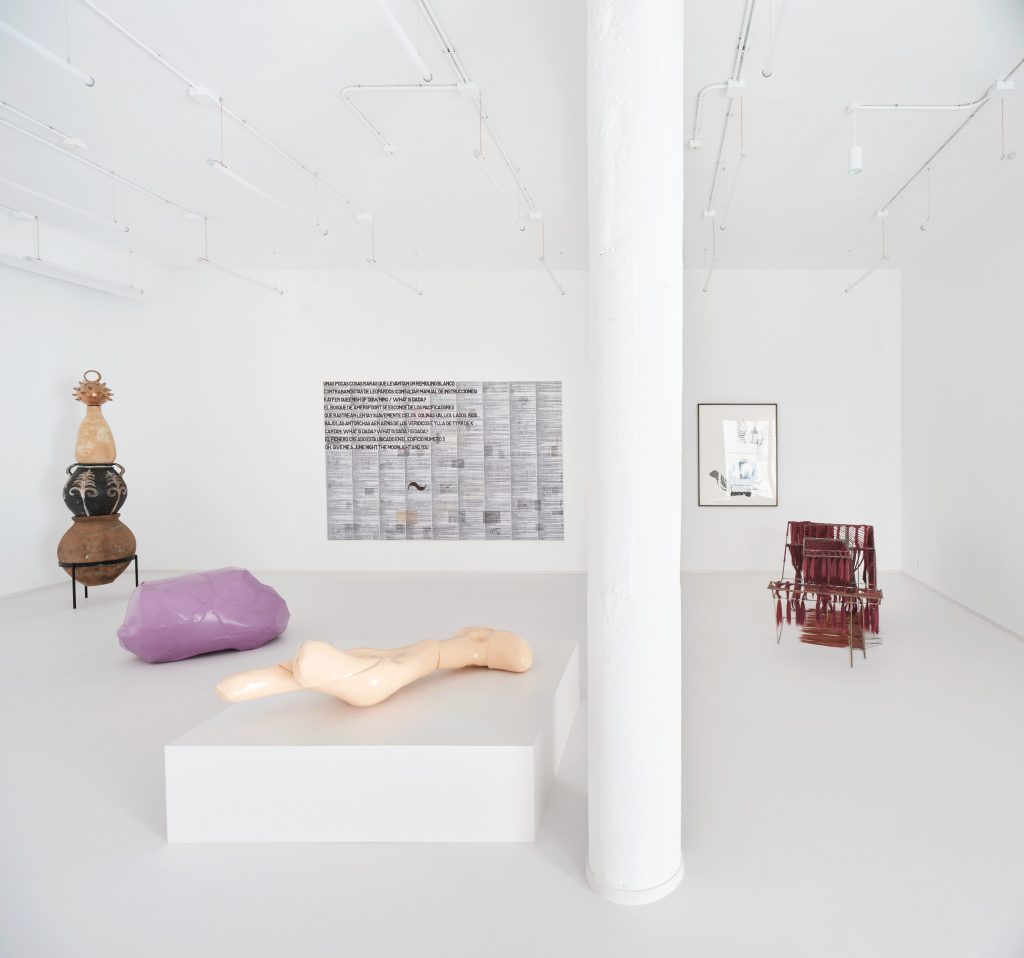
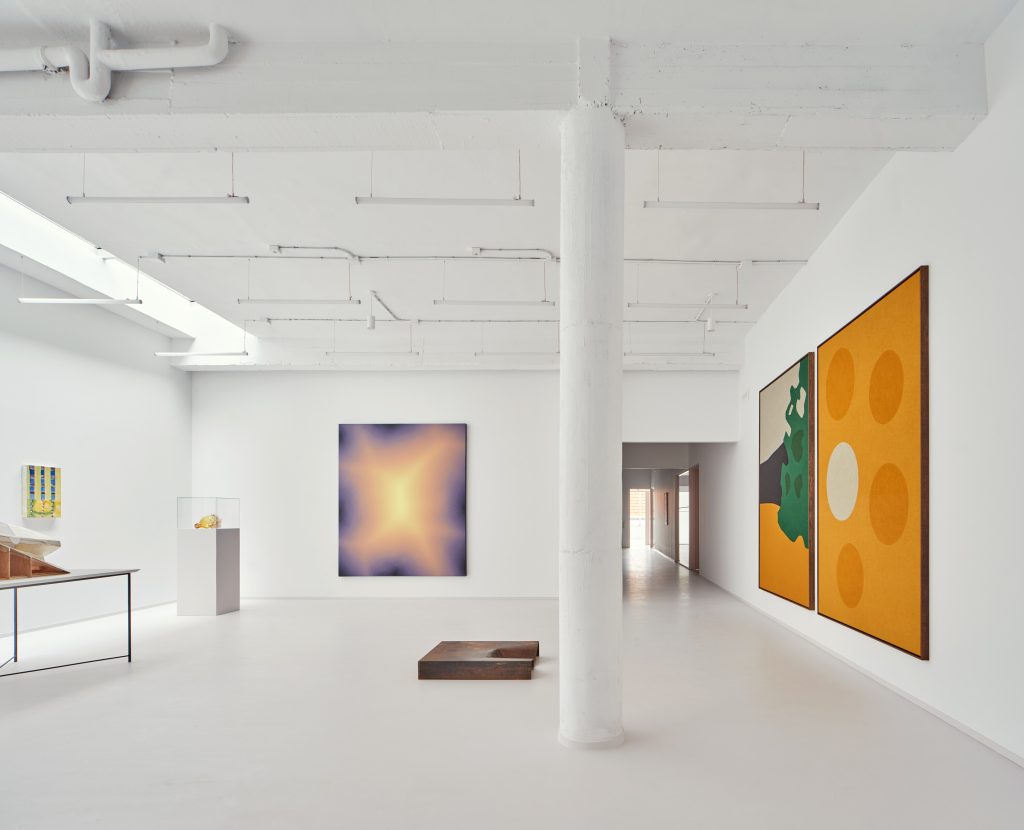
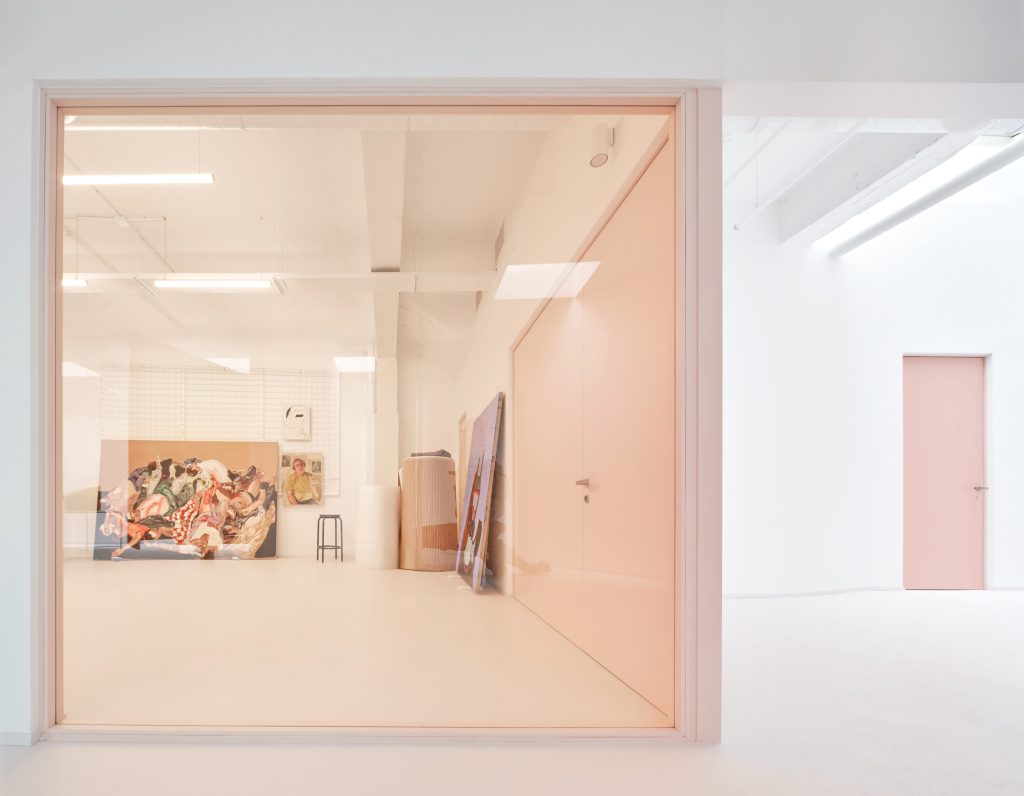
The 600 square metre interior refuses the conventional segmentation of functions. Exhibition spaces unfold alongside storage, kitchen, dining, and workspace without hierarchy, forming a continuous field in which each element remains visible and implicated in the whole.
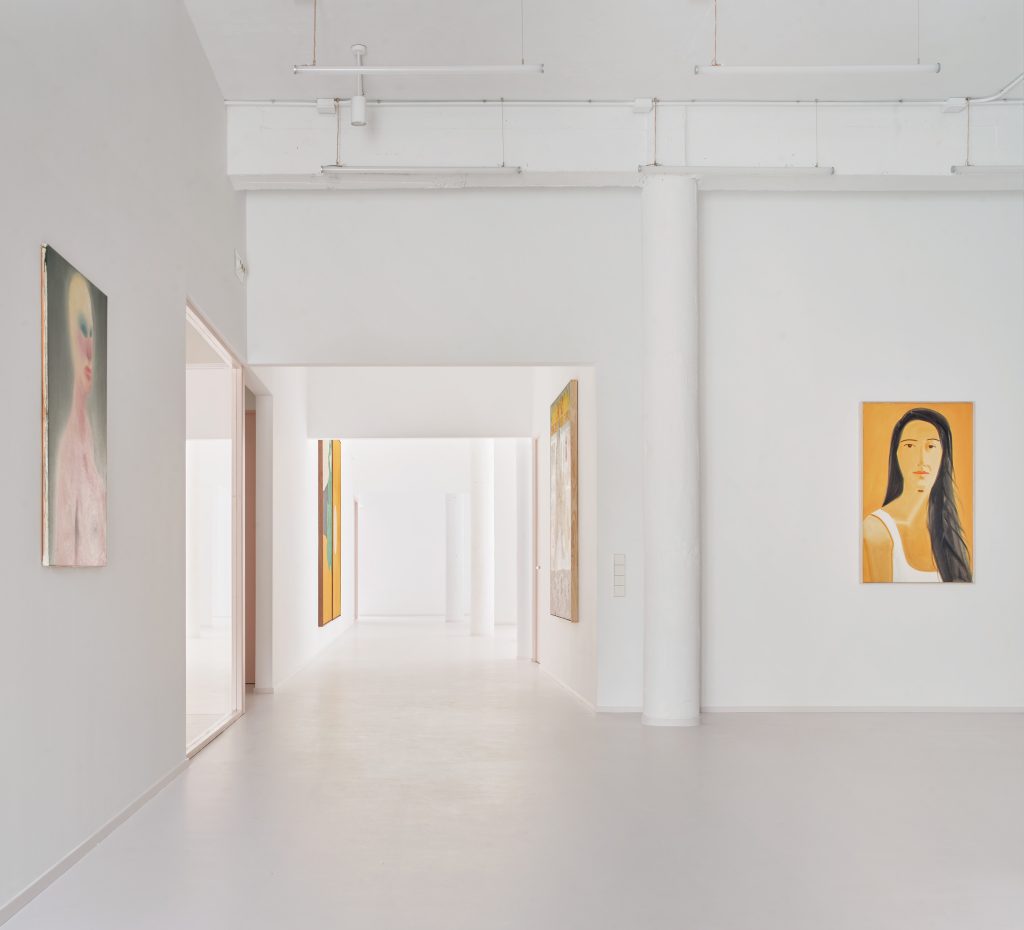
This refusal of separation produces a different form of attention. Art is no longer encountered in moments of pause alone, but through repetition and return. A painting glimpsed while passing, a sculpture seen in peripheral vision during a conversation, a work revisited under shifting light. The architecture does not isolate the act of viewing, but distributes it across duration.
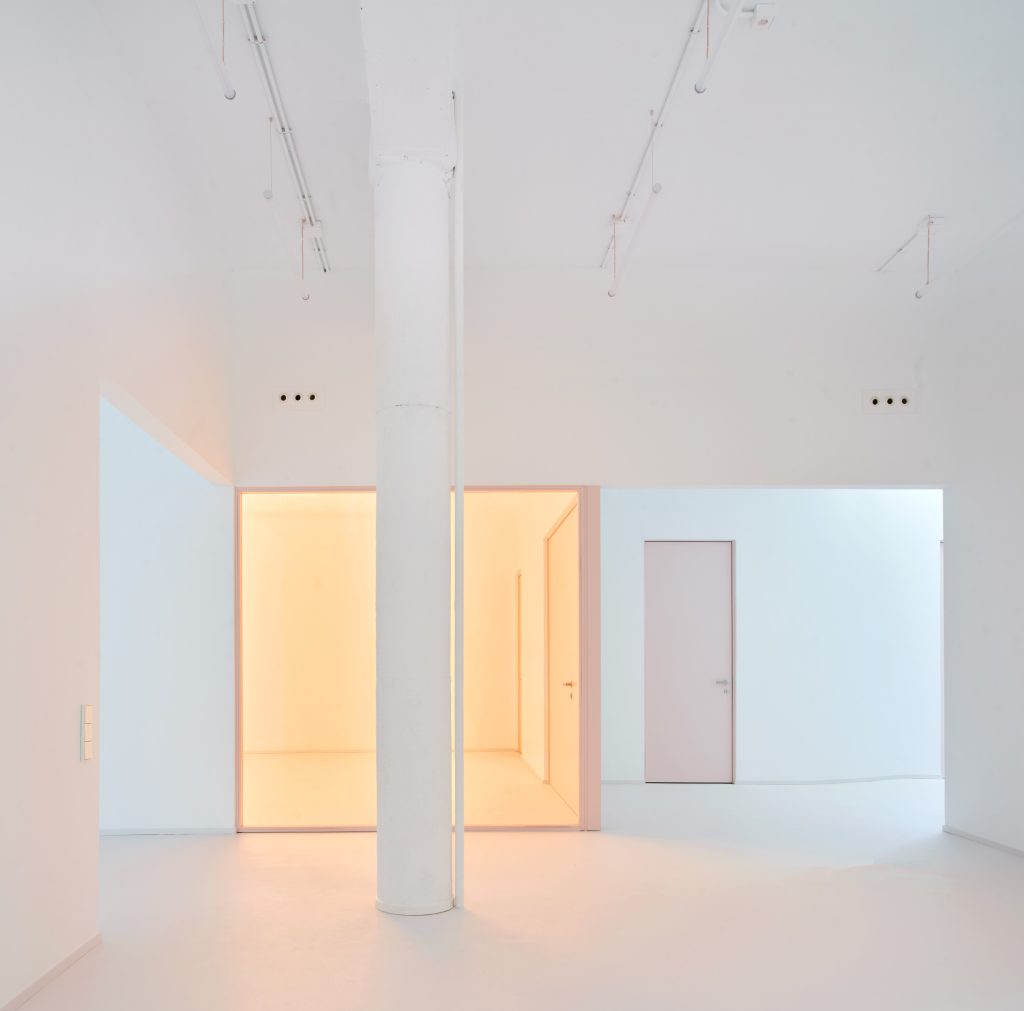
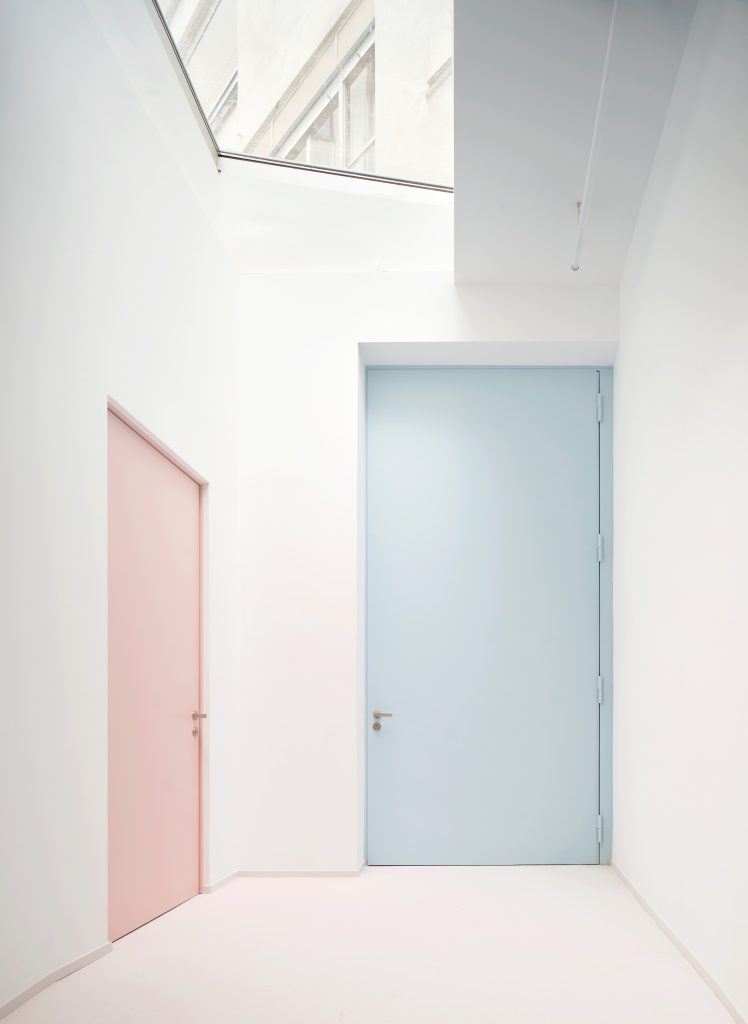
The office, oriented toward one of Santander’s inner courtyards, introduces a calibrated softness into this system. Natural light enters obliquely, tempering the introspective interior and establishing a quiet counterpoint to the density of artworks. What emerges is not a contrast between public and private, but a gradient of occupation.
FRAMING AS PRACTICE
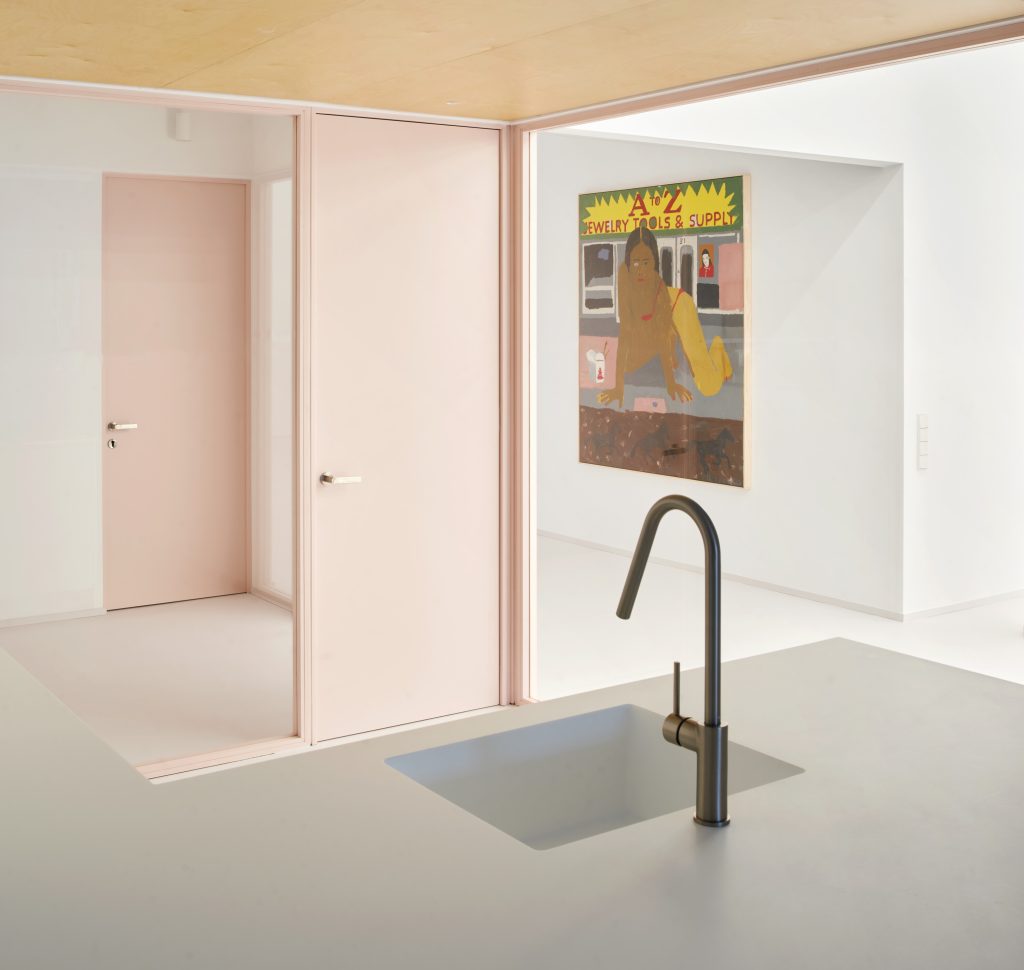
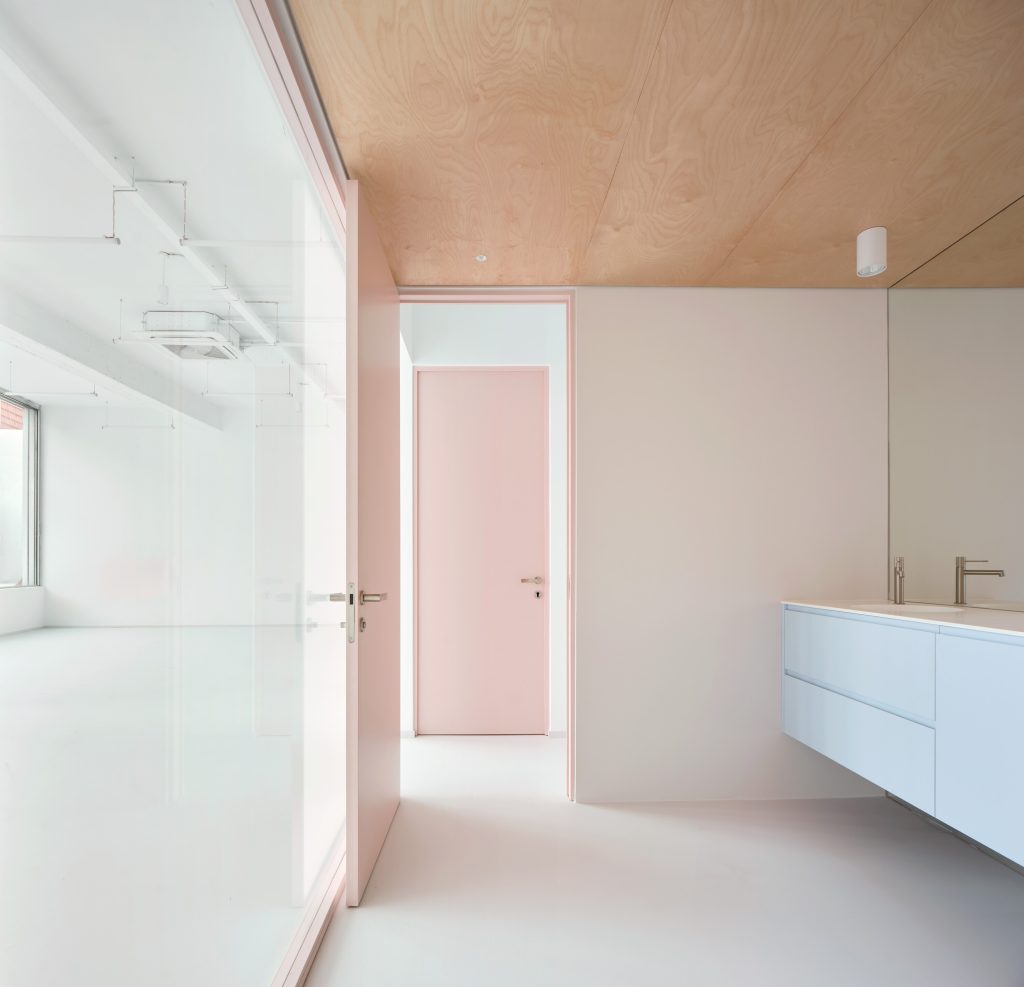
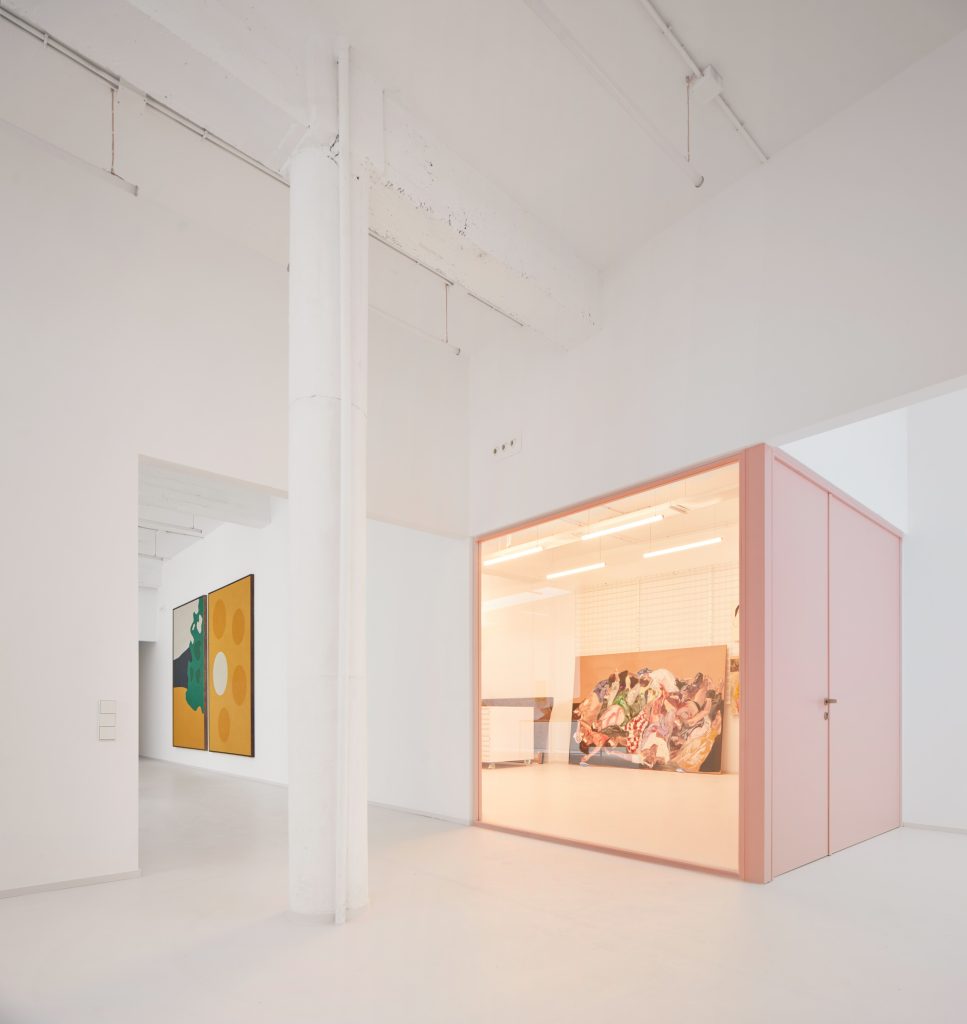
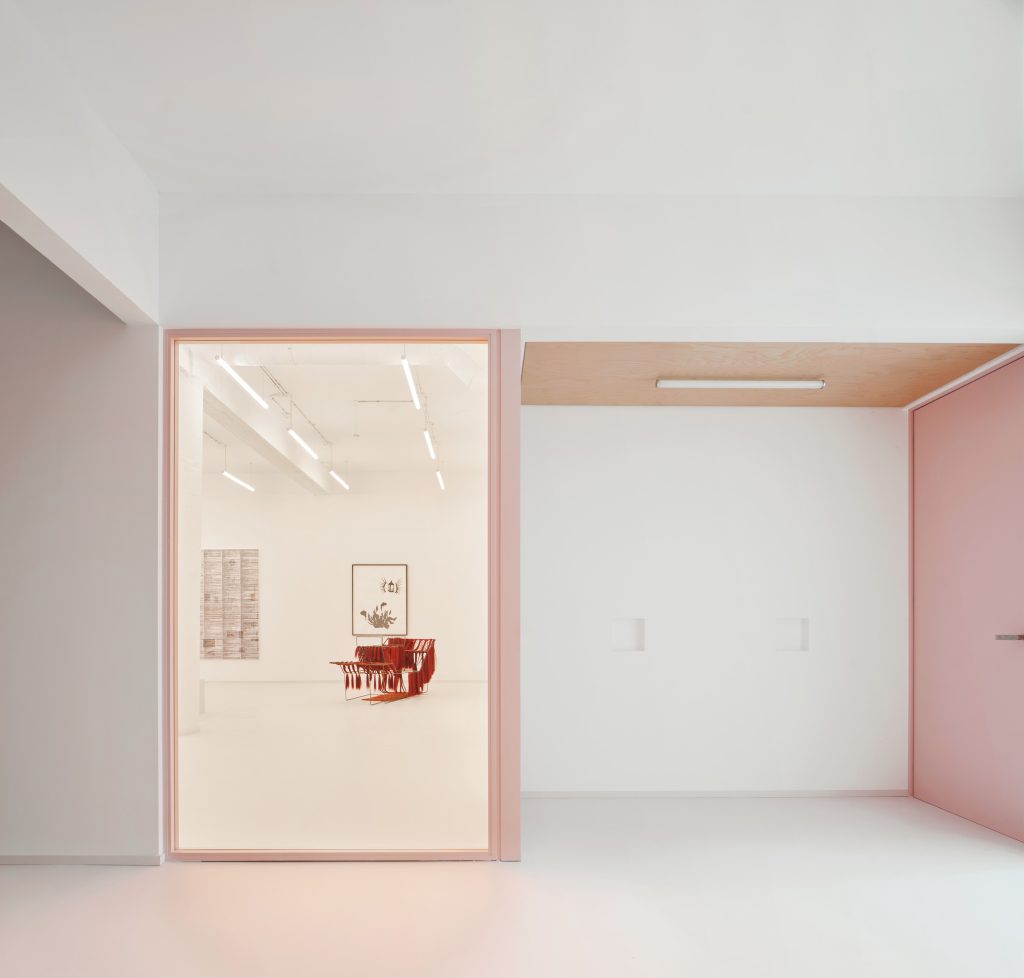
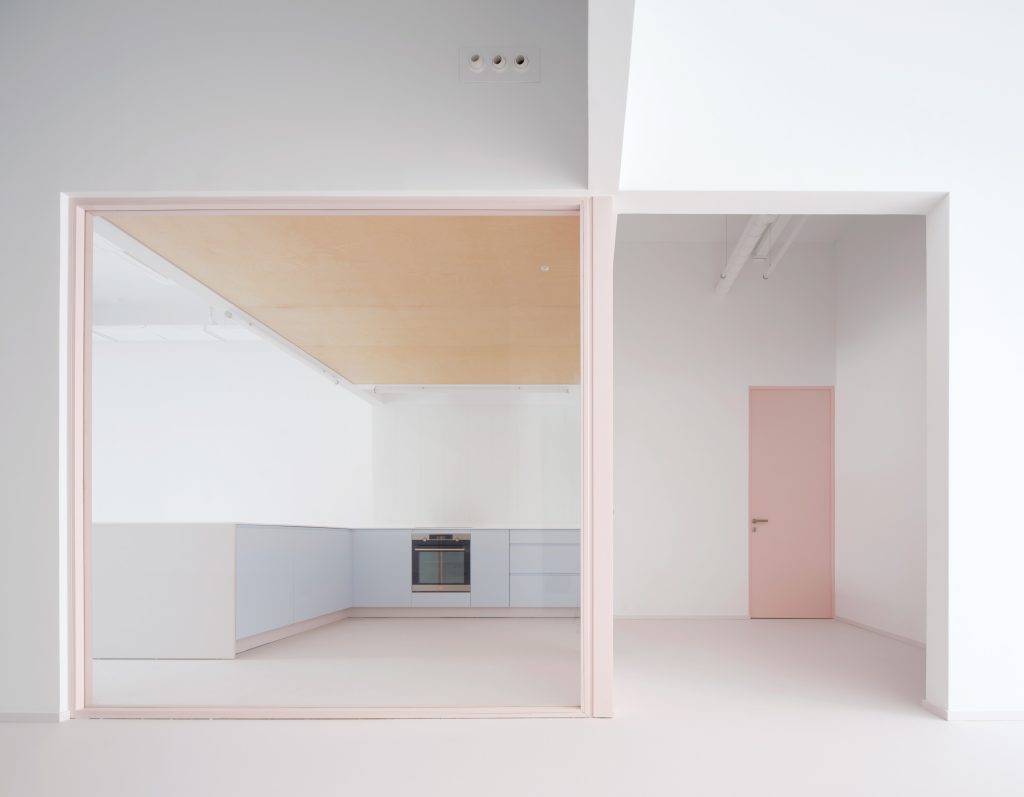
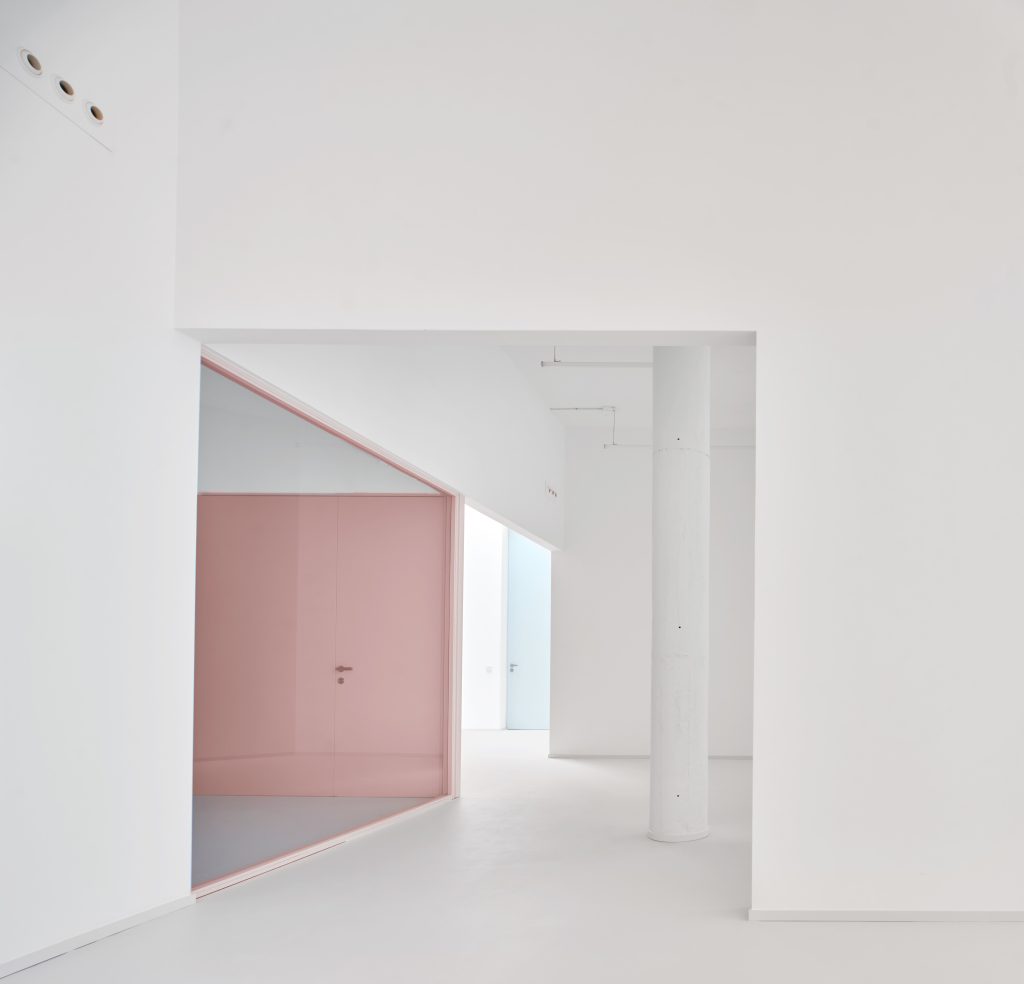
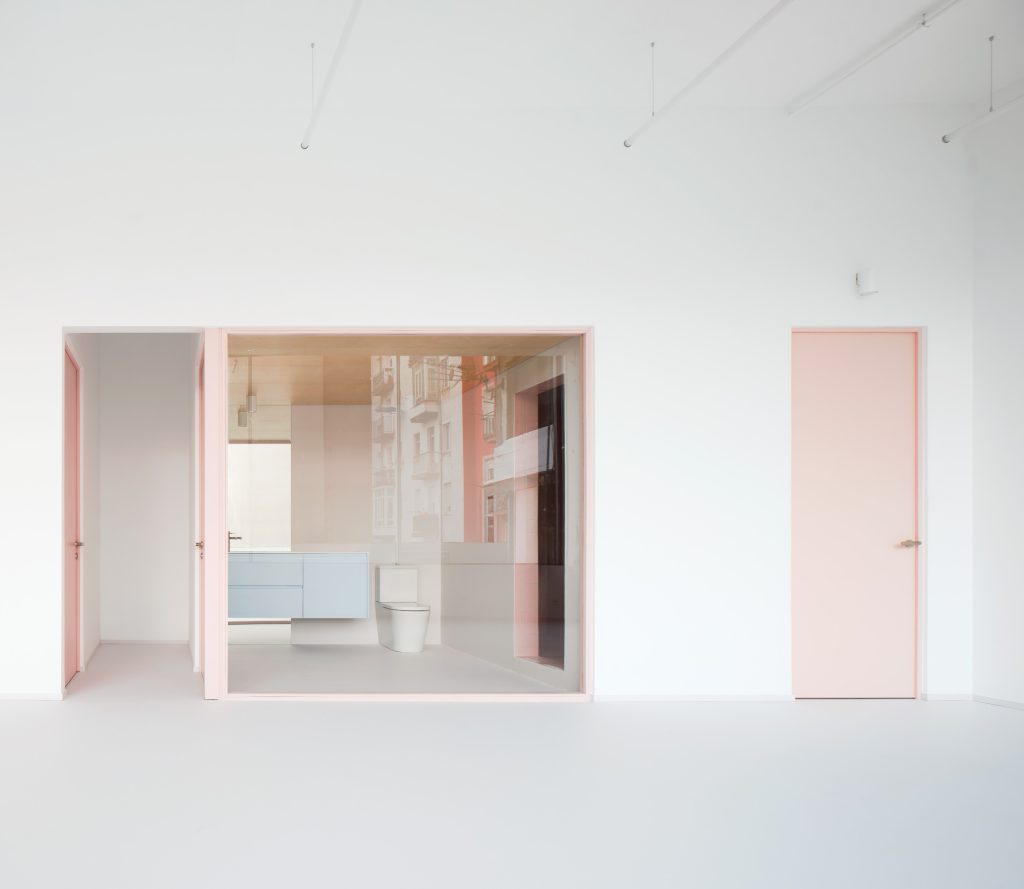
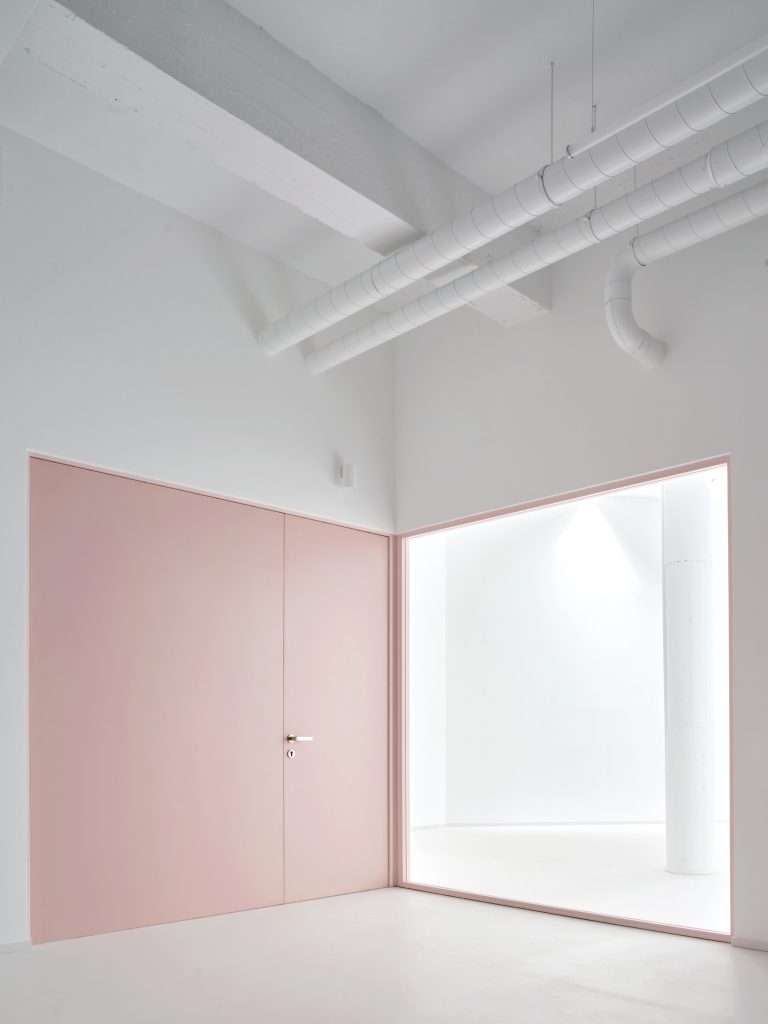
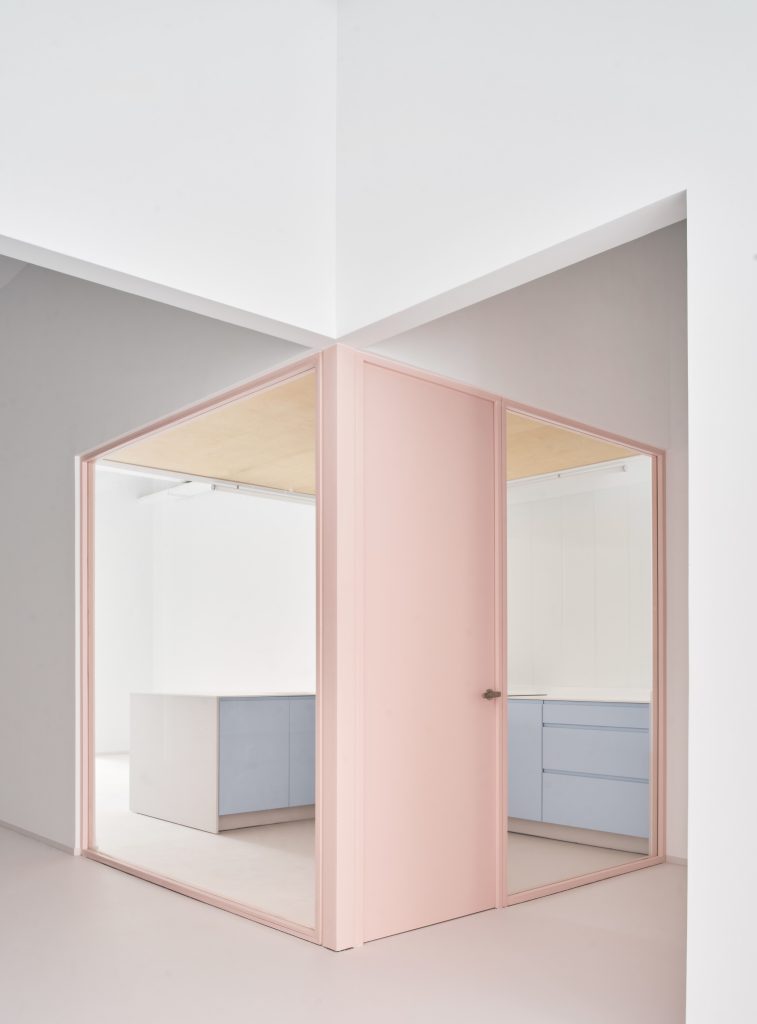
A system of square glass partitions, outlined in pink, extends across the interior as both structure and device. These frames do not simply divide space. They construct a sequence of visual fields through which both art and life are continuously composed.
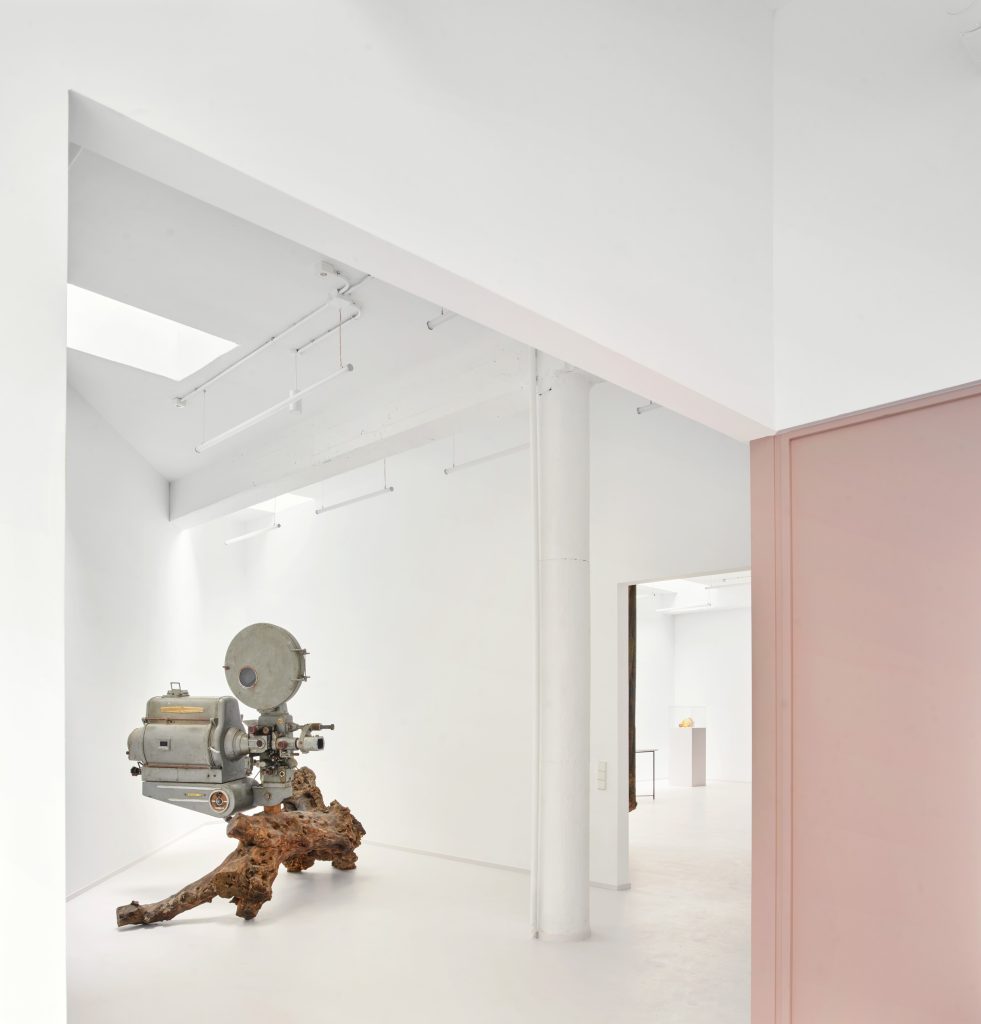
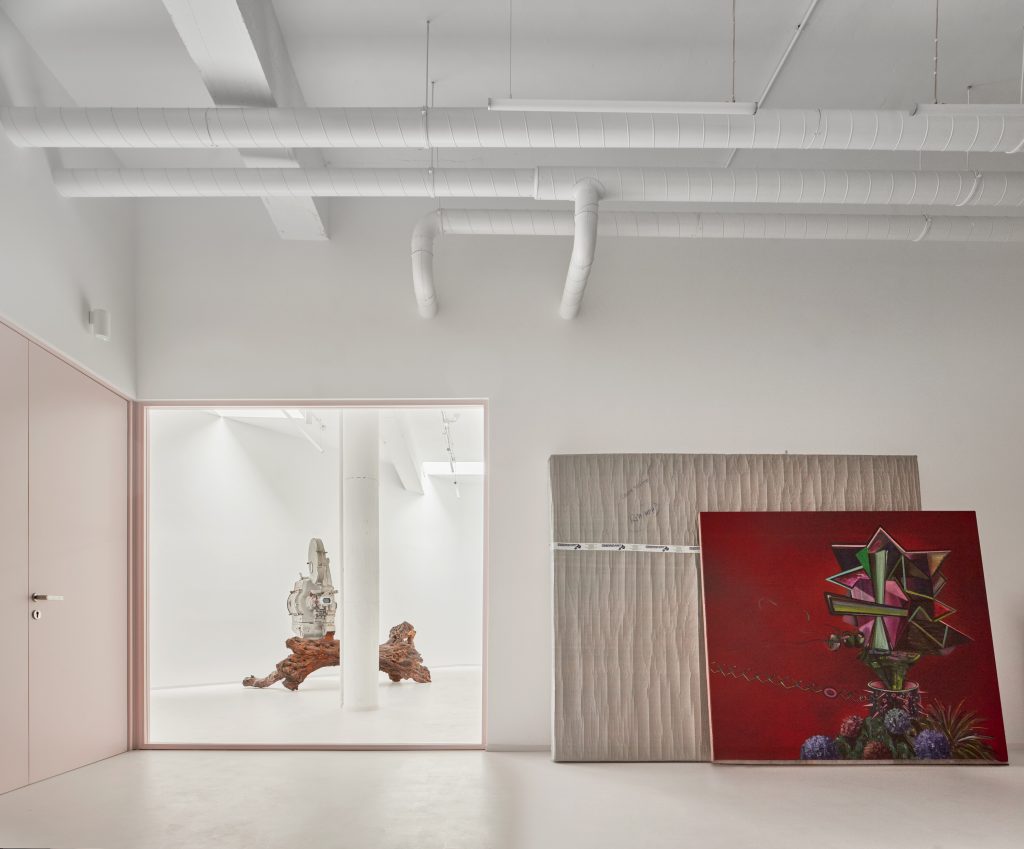
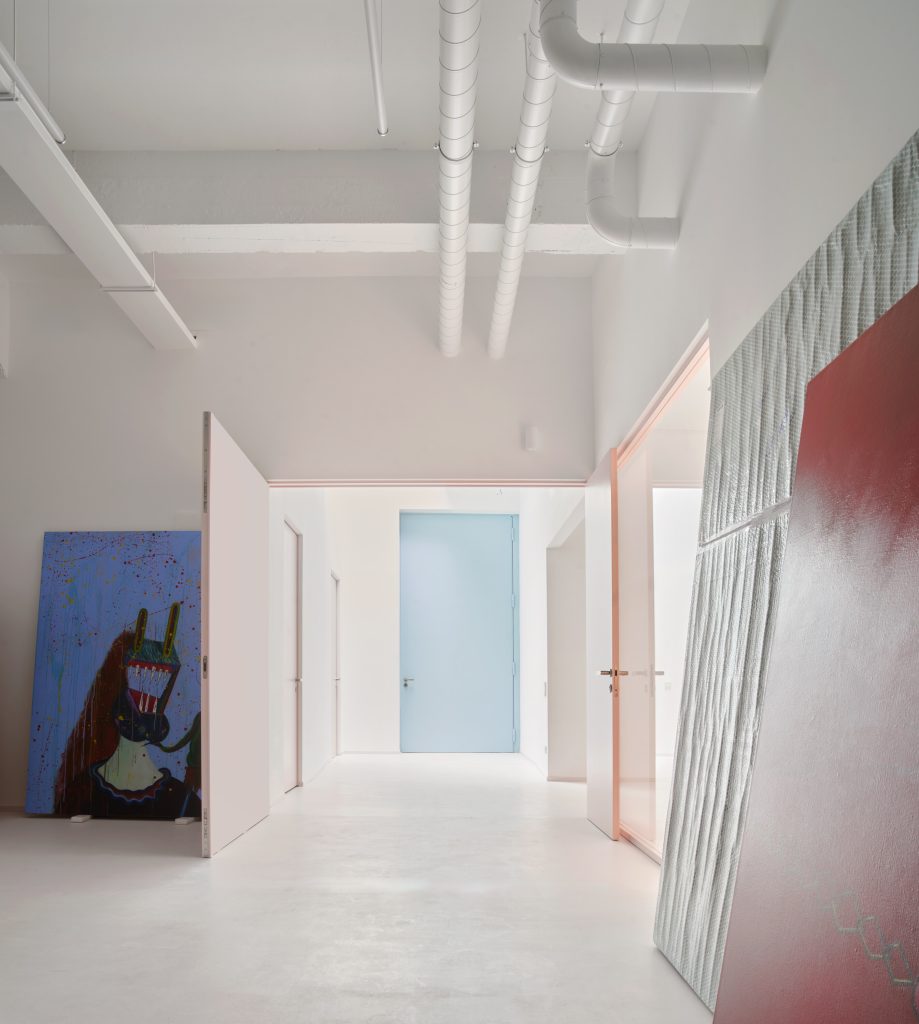
Within this framework, the act of framing becomes reciprocal. Artworks are seen through the partitions, but so too are the gestures of daily life. Cooking, working, moving, pausing. Each is rendered visible, not as spectacle, but as part of an ongoing visual continuum. The hierarchy between artwork and inhabitant begins to dissolve, replaced by a more ambiguous condition in which both occupy the same plane of attention.
MATERIAL AND AFFECT
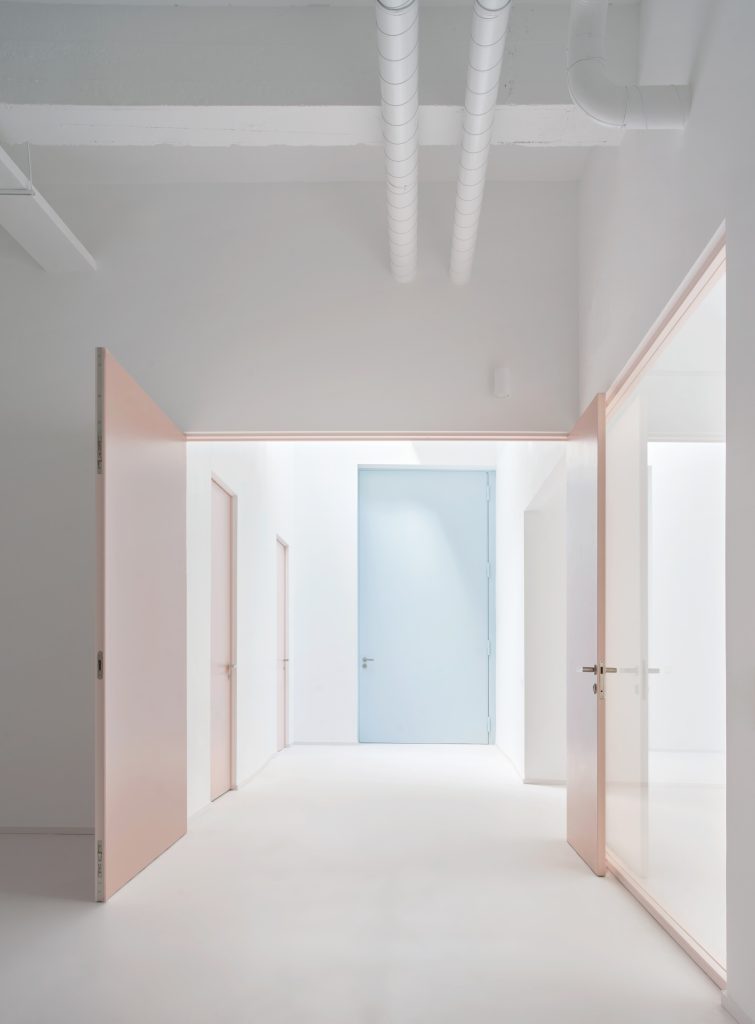
The interior is defined by a controlled material palette that operates less as expression than as modulation. White surfaces establish a field of neutrality, amplifying light and reducing distraction. Grey flooring introduces weight and continuity underfoot. Pink frames trace a graphic rhythm across the space, while light blue furnishings register as soft interruptions within an otherwise restrained composition.
In more intimate rooms, birch wood ceilings bring a shift in temperature and scale. These moments of warmth do not disrupt the overall clarity, but recalibrate it, allowing the space to move between exposure and enclosure.
BETWEEN VISIBILITY AND INTIMACY
Colección ES Headquarters occupies an unstable position between domestic interior and institutional space. It is neither fully private nor entirely public, neither purely lived nor exclusively exhibited. Instead, it sustains a condition of coexistence, where art and life remain in continuous negotiation.
What the project ultimately proposes is not a new typology, but a recalibration of attention. By embedding art within the ordinary, it challenges the assumption that aesthetic experience requires separation. Here, meaning is not produced through distance, but through proximity.