text SAKEHITO TSUBASA
image MYUNGCHAN KIM
In an era saturated with images and accelerated modes of production, painting persists not as a residual medium but as a site of resistance. In Synthetic Breath, Myungchan Kim approaches painting as a physical event grounded in the body and mediated through material. The work does not begin with representation, but with the recognition that every painted surface carries the trace of an action. What matters is not only what is depicted, but the force embedded in its making.
For Kim, painting operates through a specific kind of intensity that cannot be translated into language or concept. It resides in what he describes as tremor, a subtle instability within the brushwork that resists total control. This tremor is not expressive in the conventional sense. It is neither dramatized nor exaggerated. Instead, it emerges as a condition of contact between the body and the surface, registering hesitation, adjustment, and the limits of precision. In this sense, painting becomes a field where sensation precedes meaning.
The persistence of painting, within a contemporary landscape defined by digital mediation, is grounded here in its capacity to sustain slowness and attention. Kim’s work insists on the value of duration, of looking as a physical act, and of the image as something encountered rather than consumed. The painted surface does not deliver information. It produces a relation.
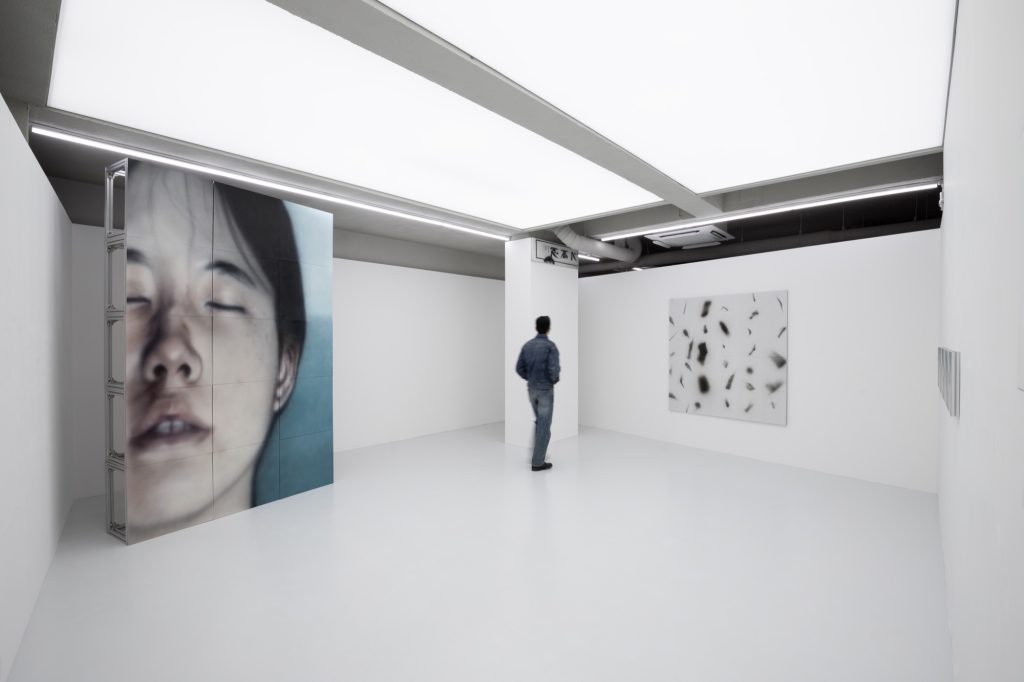
Subjects Between Distance and Contact
Kim’s practice unfolds at the intersection of people, technology, and images. Rather than positioning these as separate domains, he treats them as overlapping conditions that shape contemporary experience. Technology is not approached as a subject to be critiqued, but as a force that reorganizes perception and gesture. Within this context, painting becomes a means to examine how human actions are altered, extended, or displaced by mechanical systems.
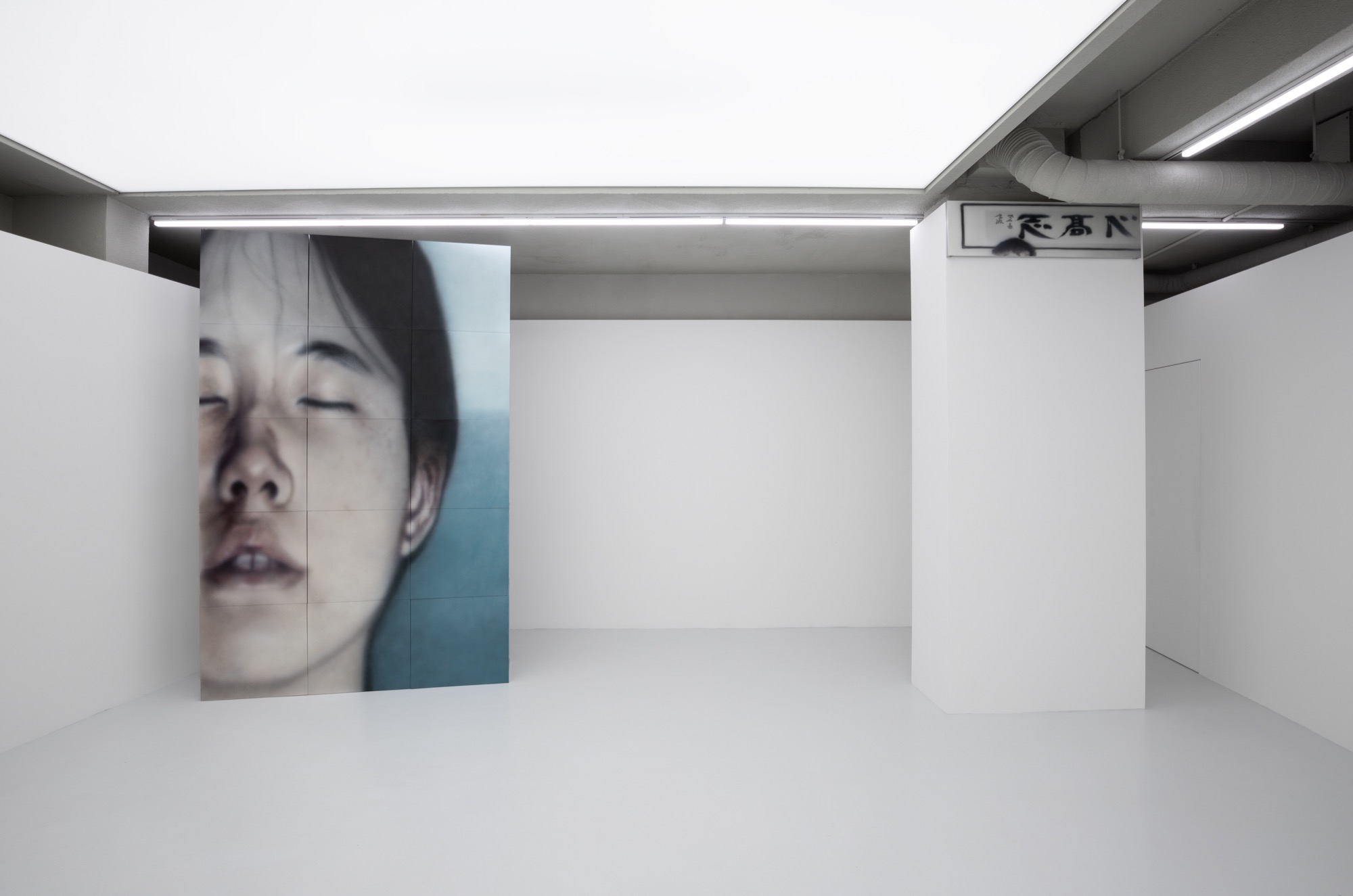
The figures that appear in his work are often derived from photographs he has taken or staged. These images provide a structural starting point, yet the act of painting introduces a displacement. The task is not to reproduce the photograph, but to construct a new visual reality that emerges through the transformation of its surface. Over time, certain motifs return. Bodies that carry weight, objects that maintain distance, forms that resist immediate recognition. These are not neutral subjects. They are conditions through which the artist encounters his own sense of being.
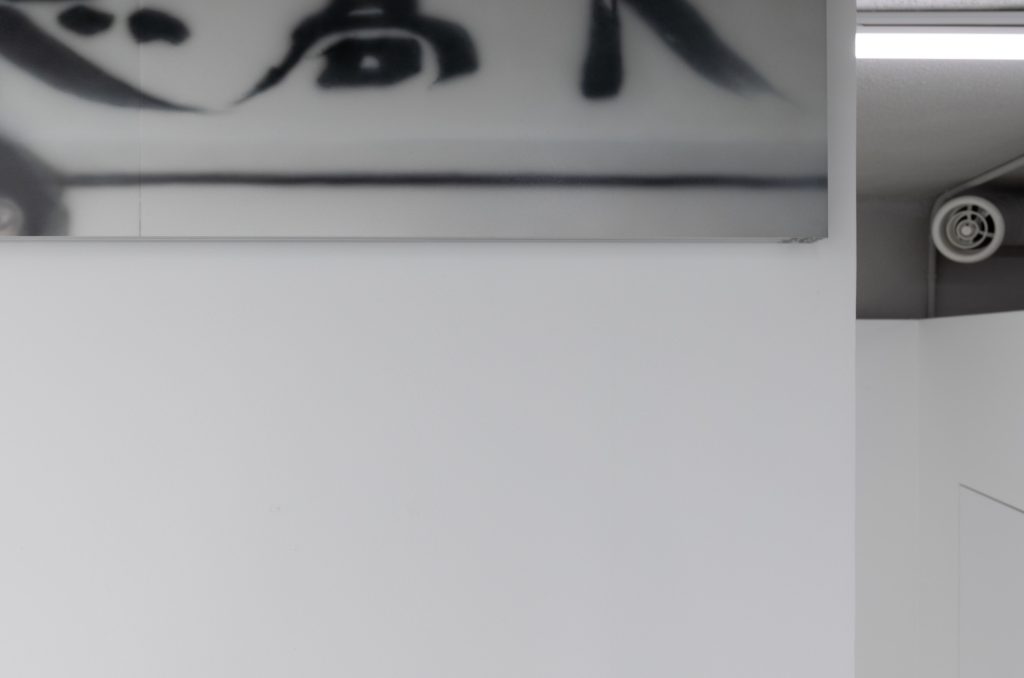
People, technology, and painting are my main interests. Technology continues to reshape human senses and experiences. And I try to merge mechanical actions with human gestures. Chance on rules, hesitation on execution, tremor on precision. This isn’t about criticizing technology.
Myungchan Kim
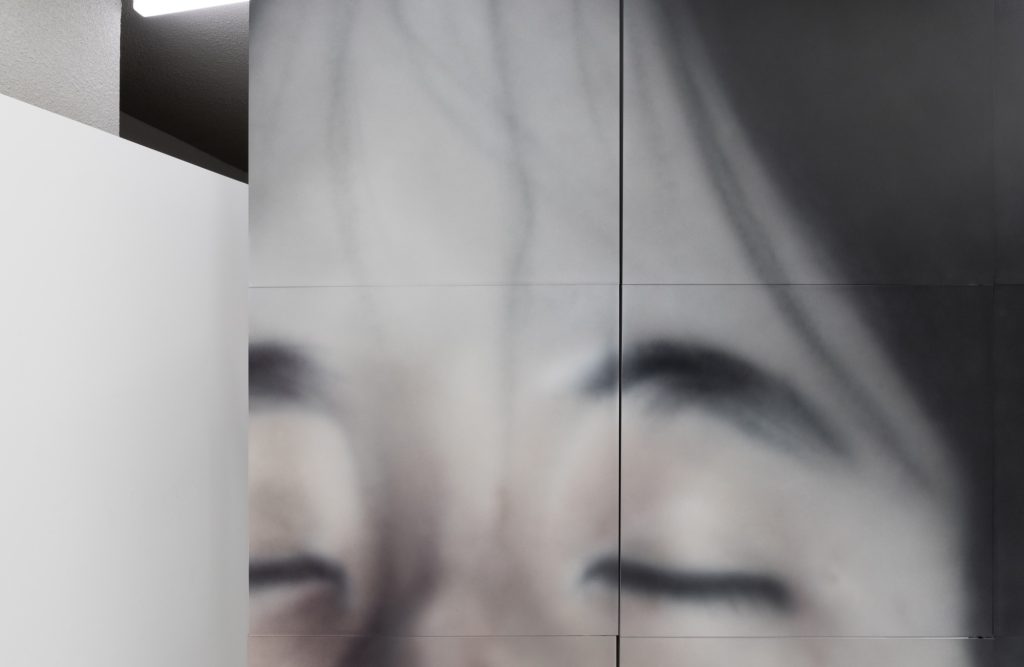
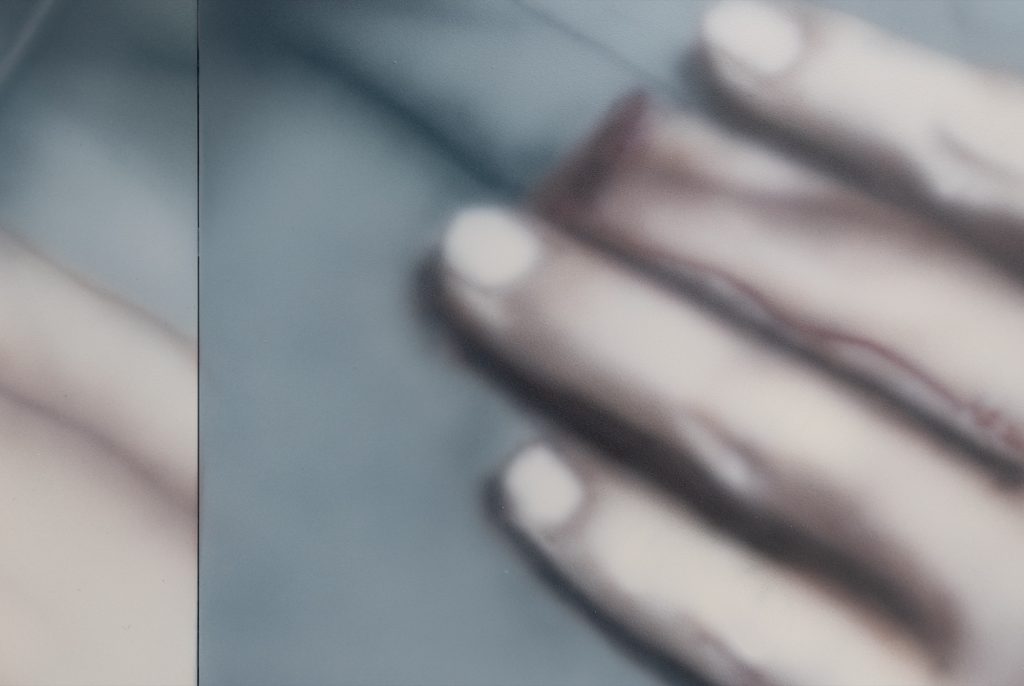
What emerges is not an image that demands interpretation, but one that calls for proximity. The figures do not offer themselves as fully legible forms. They require a different kind of engagement, one grounded in empathy rather than analysis. In this way, Kim’s figurative language moves away from narrative and toward a more ambiguous, affective register.
Material plays a central role in this shift. By working on supports such as styrofoam, concrete blocks, and egg cartons, Kim situates painting within the textures of contemporary material culture. These surfaces are not neutral carriers of images. They shape the experience of the work, introducing irregularities, resistances, and associations that cannot be separated from the image itself.
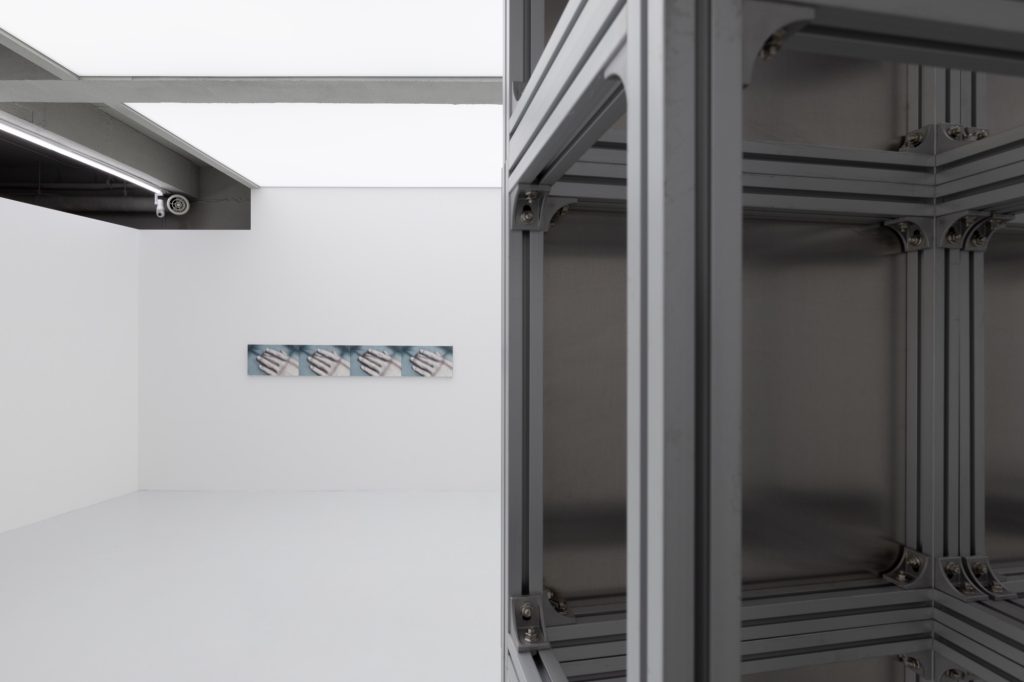
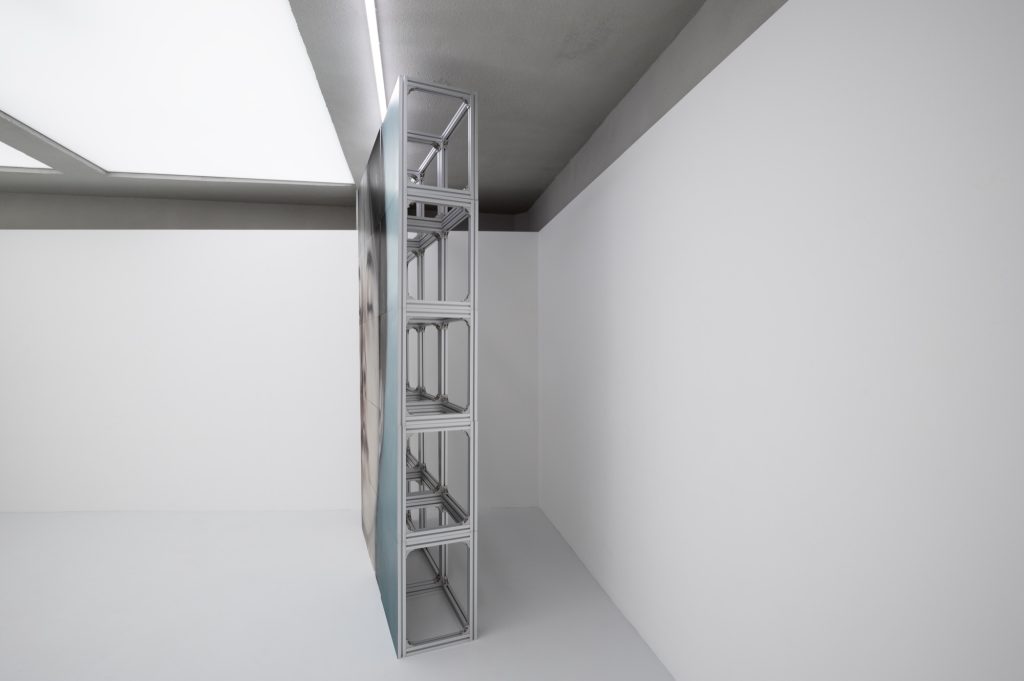
The transition to aluminum marks a further development in this trajectory. Its smooth and reflective surface aligns with the logic of industrial production and digital environments. At the same time, it introduces a tension between cold precision and the instability of the painted mark. Within this encounter, the work situates itself between two conditions that define the present. The body and the machine, the organic and the fabricated, the tactile and the mediated.
Technique as Tension
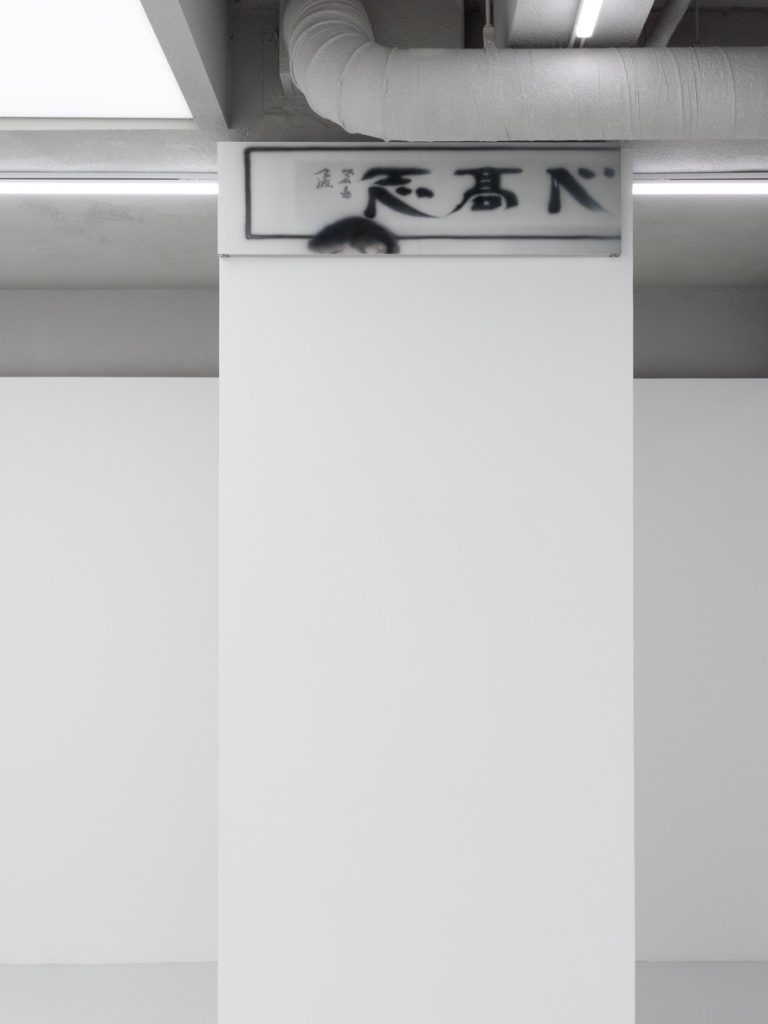
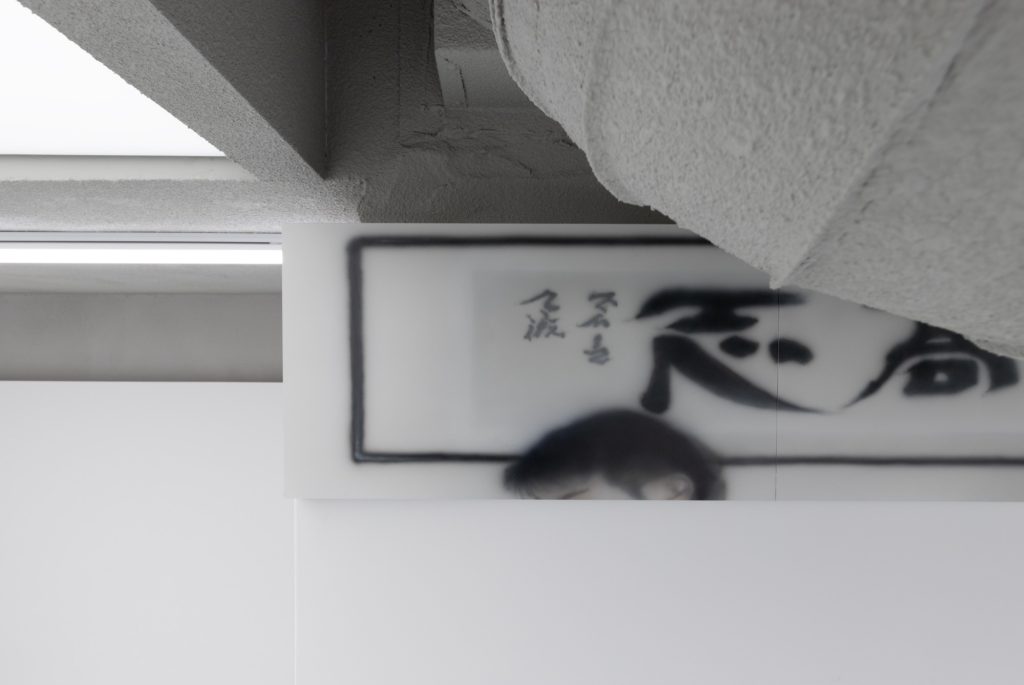
Kim’s current methodology is defined by a deliberate restriction of tools. The absence of stencils and masking tape places the entire process under the direct control of the hand. The airbrush, often associated with smoothness and uniformity, becomes here a device that exposes uncertainty. Lines waver. Edges shift. The surface records not only intention but also doubt.
This tension between control and release forms the core of the work. Mechanical parameters such as air pressure, nozzle size, and distance from the surface interact continuously with bodily variables including speed, rhythm, and hesitation. The resulting image is not the product of a fixed system, but of a dynamic negotiation between these forces.
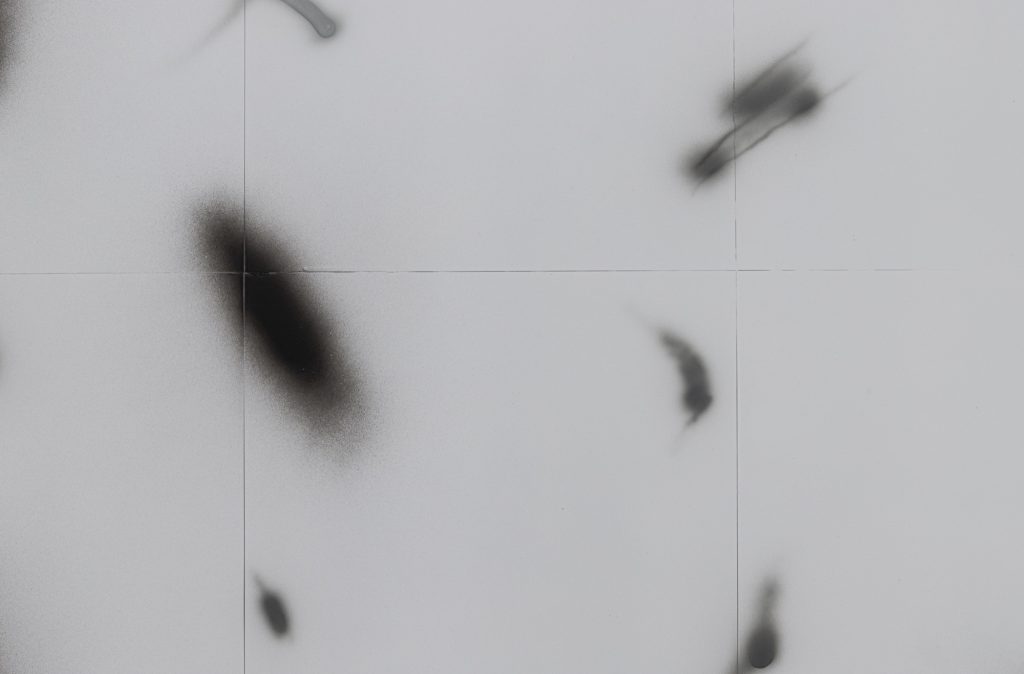
What distinguishes Kim’s approach is his attention to subtlety. The marks he values are not those that assert themselves with force, but those that remain close to disappearance. Timid lines, hesitant gestures, and controlled instabilities become the primary means through which the image is constructed. These marks do not declare themselves. They accumulate, forming a surface that holds both restraint and vulnerability.
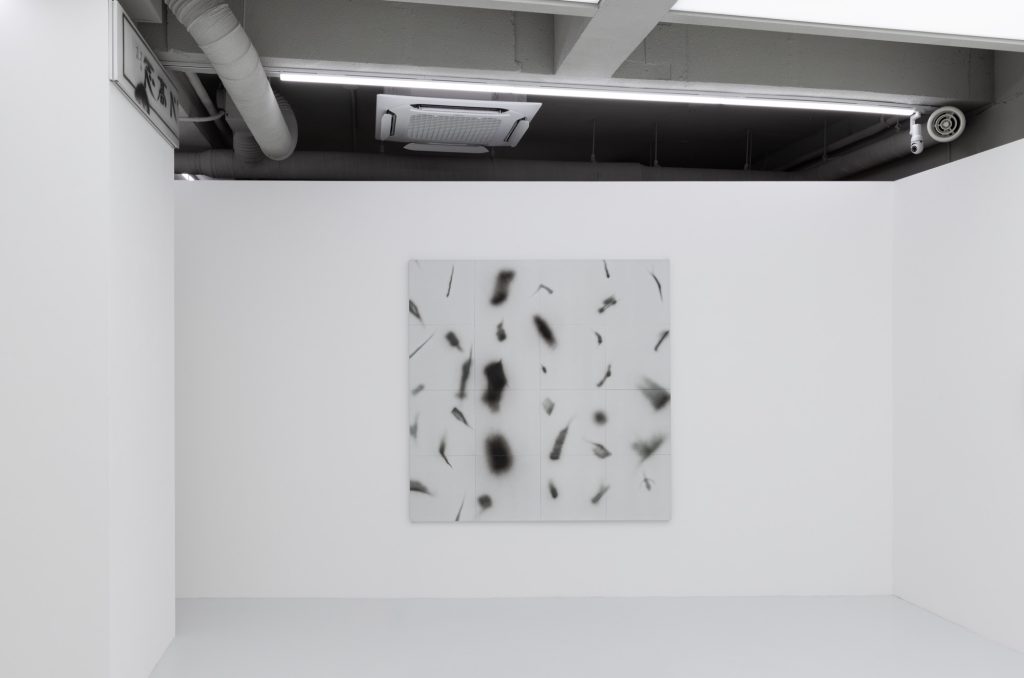
This sensibility extends to his use of color. Rather than relying on saturated tones, Kim works within a range of muted hues that reflect the complexity of perception. Color is treated as a layered condition, where slight variations produce depth and ambiguity. The surface does not resolve into a single statement. It remains open, composed of shifts that unfold gradually through looking.
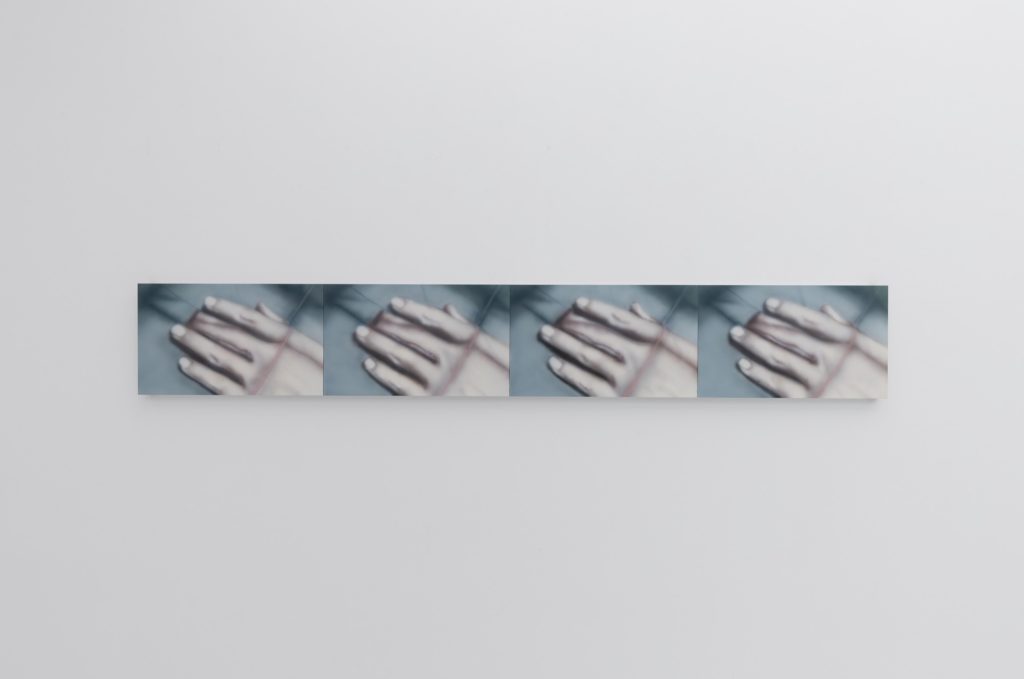
In this context, painting is neither a representation nor an object. It is a condition that emerges from the interaction of body, material, and system. Synthetic Breath situates this condition within the contemporary moment, not by illustrating its themes, but by embodying its tensions.
[End]