
Tò he, a name that sounds at once rustic and strangely enchanting, has been a familiar toy to Vietnamese children for generations. Made from steamed rice dough dyed in vivid shades of green, red, purple, and yellow, small pieces are pinched off and shaped into all kinds of figures: animals, legendary heroes, everyday objects, fruits, and more, each seemingly brought to life by the artisan’s skilful hands.
Tò he making is more than simply a handicraft. It is a symbol of Vietnamese folk culture, closely intertwined with village life, traditional festivals, and the innocent childhood memories of generations of Vietnamese people.
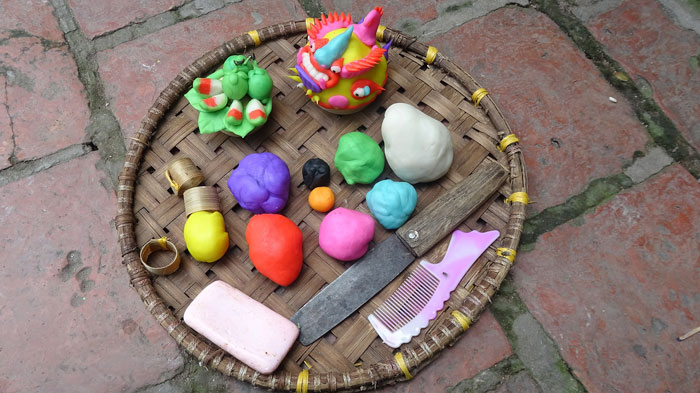
Tò he is believed to have originated from dough figures once made as offerings in religious and ceremonial rituals. These early forms often depicted peacocks, chickens, buffaloes, cows, pigs, and fish, which is why people originally called them đồ chơi chim cò (“bird-and-animal toys”) or con bánh (“dough figures”).
In northern Vietnam, artisans also shaped the dough into miniature temple offering trays, complete with bunches of bananas, areca nuts, pork legs, plates of sticky rice, and other foods. The colours were made to resemble the real objects, and a little sugar was added, so the figures could even be eaten.
Later, the figures were attached to small tube-shaped whistles coated with malt syrup. When blown, the whistles produced a “tò te” sound, and over time the name was gradually altered into “tò he,” as it is known today.
The ingredients are remarkably simple: finely ground ordinary rice flour that is steamed until cooked, or dried leftover rice ground into powder, then coloured with natural or synthetic dyes to create bright, vivid tones. Traditionally, the dough was made safe enough to eat, so once children had finished playing with their tò he, they could simply… eat them.
text GIÁNG HƯƠNG
Image source VIETNAM CULTURAL HERITAGE ASSOCIATION
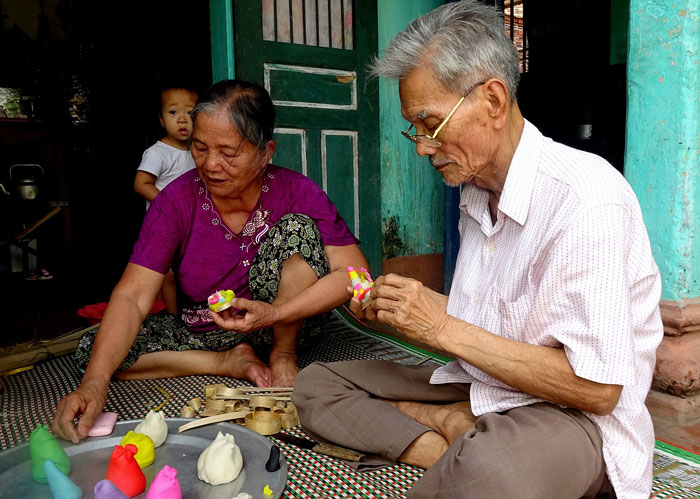
A tò he artisan is much like a village sculptor, with skilful hands and a remarkably rich imagination. Many study old books and historical texts in order to recreate figures such as Guan Yu, Zhang Fei, Sun Wukong, Zhu Bajie, graceful traditional maidens, or the heroic Trưng Sisters, Trưng Trắc and Trưng Nhị.
The range of figures is almost endless: chickens, horses, elephants, rabbits, bears, cats, grasshoppers, crickets, crabs, fish, and many more. Fruits and everyday objects are equally varied, from bunches of bananas and grapes to pomelos, custard apples, five-fruit trays, houses, cars, and bicycles, all rendered in a charming and playful manner.
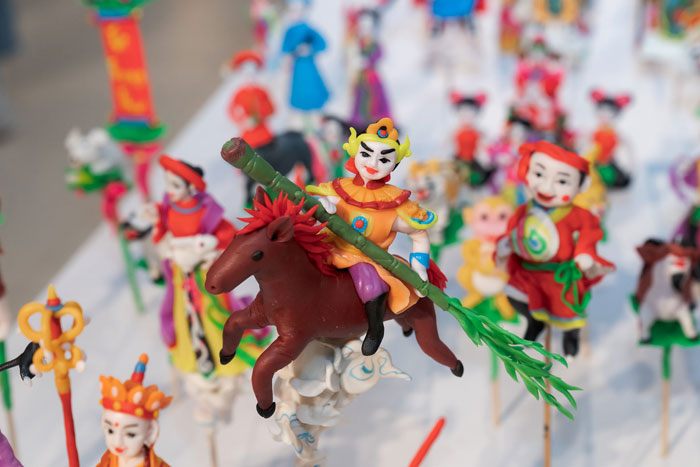
With only a few small pieces of coloured dough, the artisan can quickly bring a character to life: Zhang Fei with his fiery red face, sharply raised eyebrows, and imposing weapon in hand; a warhorse charging forward; an elephant carrying a howdah with a female general seated above; or an attendant standing guard with a spear.
Once completed, each figure is mounted on a thin split-bamboo stick and arranged around the lid of a wooden box that also serves as the artisan’s portable toolkit. Children can ask for almost any character or object they can imagine, and the artisan shapes it for them on the spot, turning the encounter itself into a lively experience that sparks the imagination.
In the past, tò he artisans could be found almost everywhere: at village markets, beneath banyan trees in communal-house courtyards, outside temple gates, and along the shores of Hoàn Kiếm Lake. Their presence was modest and unassuming. Amid the booming drums of festivals, they quietly shaped their little figures, selling them for only a few coins yet bringing immense delight to children. Once the children had finished playing, the toys could become part of the feast and be eaten, turning play into a small celebration and creating simple moments of connection within the community. Tò he making was never a trade that promised much profit; its true value lay in the rich spirit of folk culture it carried.
As plastic toys, electronic games, and battery-powered objects increasingly took over, many tò he artisans gradually left the craft. The familiar corners of village markets and banyan trees grew quieter, and the sounds of children laughing and calling out became less common. Many former artisans returned to farming, while only a few continued to remember and practise the craft. During festivals, the third lunar month, or the Tết holidays, they would once again open their wooden boxes, grind the rice, steam the dough, dye it in bright colours, and shape figures of kings and queens dressed in yellow robes, surrounded by fluttering flags and ceremonial decorations. In those moments, the old joy seemed to come alive again.
As Vũ Đình Liên wrote in his poem Ông đồ (The Old Calligrapher): “Those people of a bygone age – where has their spirit gone today?” Tò he similarly reminds us of a cultural heritage that is gradually fading in the face of modern life. There is both sadness and joy in its story, but it is a tradition worth preserving, so that the spirit of Vietnamese folk culture does not disappear and its simple pleasures can continue to be shared with future generations.